Why We Should Observe Lent (Part 1)

Why We Should Observe Lent (Part 1)

by Pastor Brian Phillips

When the Lenten season begins, so does open season on Lent. Particularly enjoyable are those who, with great vehemence, vitriol, and (for alliteration’s sake) venom, argue against Lenten observance, claiming it reflects a too curmudgeonly view of Christ and His work. Not all Lenten detractors object in such a way, and their more thoughtful critiques warrant further conversation.

Of particular interest were posts by Douglas Wilson (here) and Carl Trueman (here), because they both pose their objections to Lent and Ash Wednesday as being distinctly Presbyterian or Reformed objections – an intriguing claim, given the varied nature of Presbyterian and Reformed response to both (see here and here, for example). Wilson offers four “Presbyterian caveats” to support his willingness to “sit this one (Lent) out.” Condensed, while hopefully capturing his point, they are:

1 – Ash Wednesday is a violation of Matthew 6:16.
2 – Lent is inconsistent with the Old Testament pattern of feasting, particularly now that Christ has come.
3 – Lenten observance reveals the “rootlessness” of evangelicals.
4 – It is more important to fast during Advent because the season is commercialized.

Now, I would like to turn Wilson’s caveats into questions and then argue the opposite of his conclusion – that is, Presbyterians (by that, I refer to Reformed Christians and, if I may, Protestants in general) can and should observe Lent.

1 – Is Ash Wednesday a violation of Matthew 6:16?

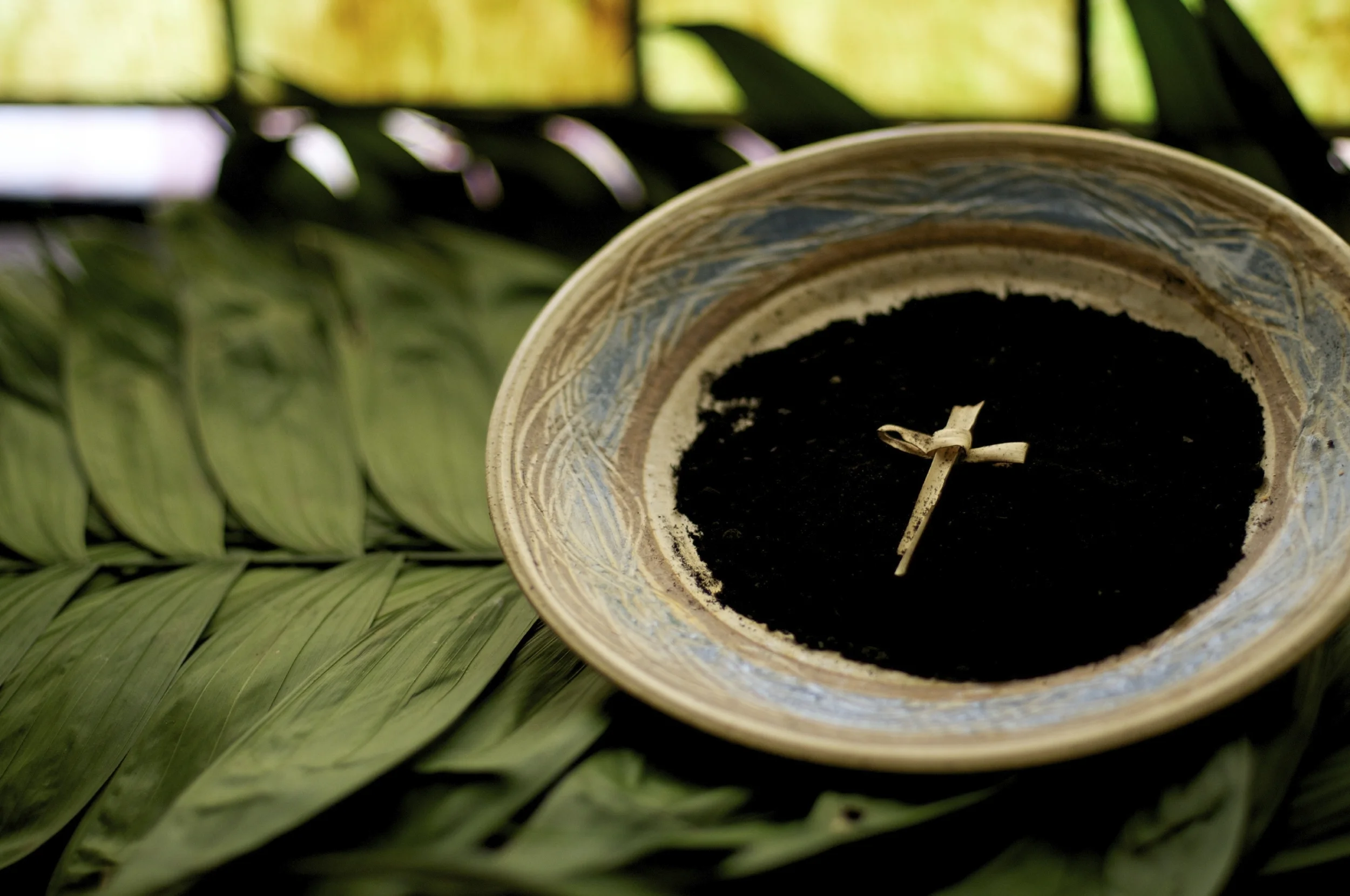
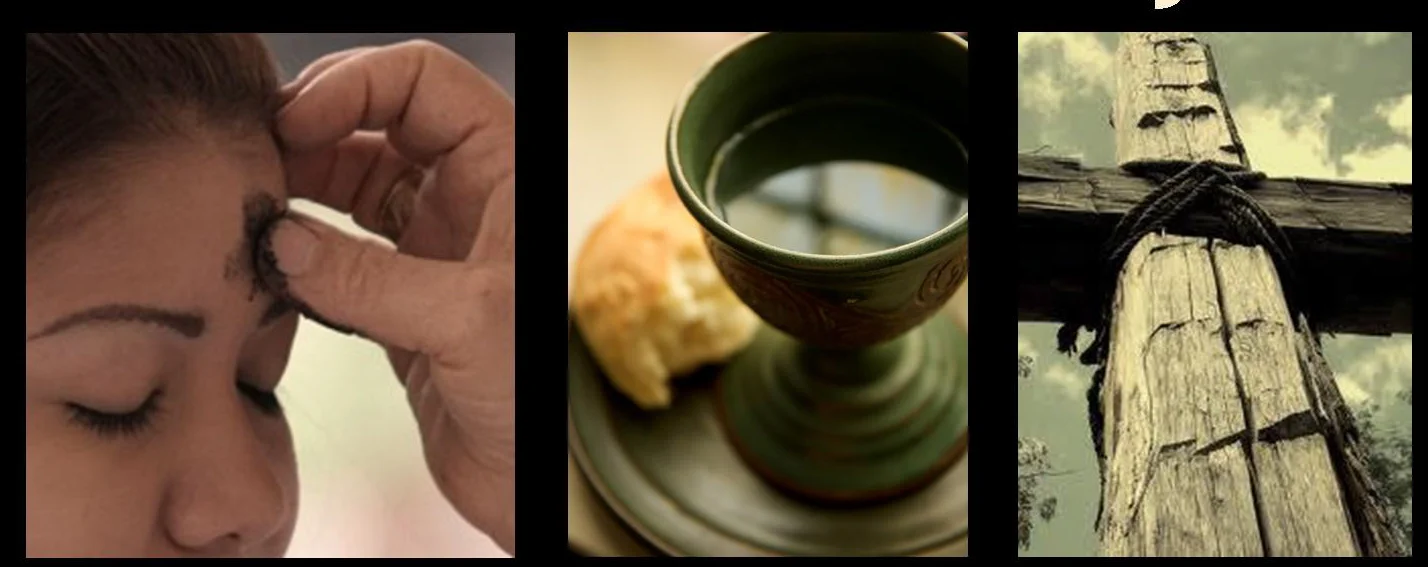
Ash Wednesday, the first day of Lent, is traditionally observed by the imposition of ashes on the forehead in the shape of the cross. In other words, while it is a day of mourning over sin, the mourning is not without hope – it points to the cross, to the work of Christ.  It is not the sour-faced ash-sitting that some describe. Rather, it is a service in which we confess our sins, seek the Lord in repentance, and look to the cross.

But, does the imposition of ashes violate Christ’s words in Matthew 6:16 – “And when you fast, do not look gloomy like the hypocrites, for they disfigure their faces that their fasting may be seen by others. Truly, I say to you, they have received their reward.” It sure could. In fact, I bet some people violate Matthew 6:16 every Ash Wednesday. And then continue the violation by social media-ing their Lenten fasts and sacrifices, ad nauseum.

If you parade the ashes about, putting off a good scrubbing as long as possible, hoping to be noticed, then, sure, you are violating Christ’s command. But, while pastors should instruct their congregations about the dangers of that, we must be humble enough to admit that we cannot pinpoint why someone got the ashes. After all, Christ’s admonition in Matthew 6:16 is one of several that address the motive for good deeds, whether giving to the poor (v. 2), prayer (v. 5), or fasting (v. 16).

Ash Wednesday is not a default violation of Christ’s words any more than praying out loud is a default violation of Christ’s words in verse 5. Nor would we stand by a Salvation Army bell ringer and berate those who give as “self-righteous hypocrites.” Christ is attacking the self-righteousness of the Pharisees who gave, prayed, or fasted to be seen. He is not attacking the humble attempting obedience. The question, then, is whether the ashes are received to be seen by others or to be reminded again of Christ and His cross as the remedy for our sin?

2 – Is Lent inconsistent with the Old Testament pattern of feasting, particularly now that Christ has come?

Wilson writes, “In the Old Testament, there was one public day out of the year where they were instructed to afflict their souls (Yom Kippur, Lev. 23:27).” That is an excellent argument for observing Ash Wednesday – one public day on which we afflict our souls.

He continues, “Everything else about their prescribed calendar was made up of feast days. There was always room, of course, for private disciplines (Num. 30:13), just as there is room for that in the Christian era (Matt. 9:15).” Lent is a season for the private discipline of fasting. Jesus, after all, describes fasting as a private discipline (Matthew 6). Pastors and individual churches may recommend Lenten observance and provide resources for encouragement during the season, but there are no Presbyterians (or any Protestants), to my knowledge, arguing for the mandatory observance of Lent.  It begins with a day of public “affliction of soul,” but it continues through to Easter with a private, non-mandatory fast.

Wilson quotes the Westminster Confession XX.1 here: “But, under the New Testament, the liberty of Christians is further enlarged, in their freedom from the yoke of the ceremonial law, to which the Jewish Church was subjected; and in greater boldness of access to the throne of grace, and in fuller communications of the free Spirit of God, than believers under the law did ordinarily partake of.”

Fine and good. But, if the Westminster Assembly had intended to rule out seasons like Lent by such a declaration, then XXI.5 is horribly out of place. There they wrote:

“The reading of the Scriptures with godly fear, the sound preaching and conscionable hearing of the Word, in obedience unto God, with understanding, faith and reverence, singing of psalms with grace in the heart; as also, the due administration and worthy receiving of the sacraments instituted by Christ, are all parts of the ordinary religious worship of God: beside religious oaths, vows, solemn fastings, and thanksgivings upon special occasions, which are, in their several times and seasons, to be used in an holy and religious manner” (emphasis mine).

It is worth noting that Chapter XXI addresses “Religious Worship, and the Sabbath Day,” that is, things done by the Church for the benefit of Christians. Lent begins with a day of repentance on Ash Wednesday, and continues with a “holy and religious fasting” that is encouraged by the Church. I would argue that both are in keeping with the pattern of the Old Testament (even as described by Wilson) and with the Westminster Confession of Faith.

Wilson argues that “Deliverance should not be commemorated with long faces.” Agreed, but this is only an argument against improper fasting, as prohibited by Jesus. But, given that Lent commemorates the 40-day fast of Christ in the wilderness, and is suspended on Sundays for feasting on the day of His resurrection, it could be argued that Lent highlights the work of Christ, rather than detracting from it. It highlights feasting through fasting.

To be continued…
Shrove Tuesday & Ash Wednesday Services

Shrove Tuesday & Ash Wednesday Services

Join us as we begin the Lenten season!

Shrove Tuesday - February 17th @ 6pm

Prayer Service begins at 6pm, followed by our pancake dinner in the Fellowship Hall.

Ash Wednesday - February 18th @ 7pm

Our service with imposition of ashes and Communion will begin at 7pm.

Services Cancelled for 2/1/26

Services Cancelled for 2/1/26

Unfortunately, for the second straight week, winter weather is forcing us to cancel our regular worship service on Sunday, February 1st.

Church members will receive information about an online prayer service. Stay tuned for those details.

We pray you all stay safe and warm, and we look forward to worshipping together with you on Sunday, February 8th!

Reflections on the Beginning of Lent

Reflections on the Beginning of Lent

by Pastor Brian Phillips

The 2026 Ash Wednesday service will be on February 18th at 7:00 p.m.

As we prepare to begin our journey through Lent – a journey of fasting, repentance, and prayer – the encouragement and perspective gained on Ash Wednesday is extremely helpful. The Ash Wednesday service… 

  • Unites us in a "mere Christian" practice, a tradition observed by our Christian brothers and sisters through the ages, and around the world

  • Provides encouragement and fellowship with one another as we begin Lent

  • Reminds us of the sacrifice of Christ

  • Nourishes our souls through the Lord’s Supper

  • Calls our minds back to the purpose of fasting

  • Helps focus our fasting on Christ, not on our own “suffering” or what we are “giving up”

  • Gives us an opportunity to pray for one another

  • Allows for a time of focused prayers of repentance and confession

The imposition of ashes is not a sacrament, and we are not “superstitious” about their application, but it is nonetheless a powerful reminder of our own mortality, and therefore, of the great attention we should give to repentance and our walk with Christ. One Anglican pastor reflected over the sobering act of applying the ashes to the members of his parish:

“—An older man shuffles forward to receive the ashes. This would be his last time…and he knows it. The cancer has eaten away at his esophagus and the doctor gave him less than nine months. He gets these eleven words more than most: Remember that you are dust and to dust you shall return.

—A new mother presents her sleeping baby. The skin of the child is soft and pure…it seems too harsh to remind this woman that her child will die; would go down to the dust. How awful! But it is true. None are exempt. The words are hard to say, but I say them anyway and try to not wake the child. I touch the new forehead lightly: Remember that you are dust and to dust you shall return.

—Once, a business woman stood before me in a smart looking suit. She was dressed for success. She had come during her lunch hour to our service at high noon. I press the ashes on her forehead and then realize that I am smudging her makeup too. Her careful facade has been marred by the sign of the cross. I wonder if she will make a quick trip to the bathroom to reapply her cosmetics. Remember that you are dust and to dust you shall return.

Second, the imposition of ashes does have a biblical basis, in addition to centuries of Church practice. For more on that, take a look at An Introduction to Ash Wednesday

If you decide not to receive the imposition of ashes, you will still greatly benefit from the Ash Wednesday service and you will not be out of place. 

If you do receive the imposition of ashes, do so humbly, as a reminder of your own mortality and need for repentance. Remember the warnings of Jesus - “And when you fast, do not look gloomy like the hypocrites, for they disfigure their faces that their fasting may be seen by others. Truly, I say to you, they have received their reward. But when you fast, anoint your head and wash your face, that your fasting may not be seen by others but by your Father who is in secret. And your Father who sees in secret will reward you” (Matthew 6:16-18).

We can all be tempted to parade our “righteousness,” even in circumstances that should create humility. When we fast or – as in the case of Ash Wednesday – begin our fast, we should never do so to be seen by men. Once the ashes are applied, remember their meaning – repent. Then, pray, wash them off, and walk in obedience. 

Finally, remember that the ashes are made in the shape of the cross for a reason – there is hope in Christ! In Christ alone do we rise from the ashes to new life.


Services Cancelled (1/25/26)

Services Cancelled (1/25/26)

Due to the winter storm, forecasted to affect our area throughout the weekend, our Sunday services (January 25th) have been cancelled.

We pray you all stay safe and warm, and we look forward to worshipping together with you on Sunday, February 1st!

An Introduction to Ash Wednesday

An Introduction to Ash Wednesday

by Pastor Brian Phillips

We are nearing the season of Lent, a 40-day period of fasting that begins on Ash Wednesday (February 18th) and ends on Easter. The 40 days mirror numerous biblical accounts – it rained forty days and forty nights in the flood, Moses spent forty days at the top of Mt. Sinai, Israel wandered in the wilderness for forty years, Elijah was given bread and water by the angel of the Lord but then didn’t eat again during his forty-day journey to Mt. Horeb, Nineveh’s 40 days of repentance before the Lord, and Christ’s 40 days of battling temptation in the wilderness. The tradition behind Lent, then, can be traced back to the early Church, but also back to the Scriptures themselves.

Lent begins with Ash Wednesday, a day that is unknown to some Protestants, even those who may observe Lent. Traditionally, Christians gather for a service of contrition and repentance on Ash Wednesday, typically called a “service of ashes.” Elements of those services differ, but many churches practice the “imposition of ashes” – the applying of ashes in the sign of the cross on the forehead.

Why? The Scriptures repeatedly refer to ashes as a sign of repentance for sin or mourning.

  • Esther 4:3 – “And in every province, wherever the king’s command and his decree reached, there was great mourning among the Jews, with fasting and weeping and lamenting, and many of them lay in sackcloth and ashes.”

  • Job 42:5-6 – “I had heard of you by the hearing of the ear, but now my eye sees you; therefore I despise myself, and repent in dust and ashes.”

  • Jonah 3:4-6 – “Jonah began to go into the city, going a day’s journey. And he called out, ‘Yet forty days, and Nineveh shall be overthrown!’ And the people of Nineveh believed God. They called for a fast and put on sackcloth, from the greatest of them to the least of them. The word reached the king of Nineveh, and he arose from his throne, removed his robe, covered himself with sackcloth, and sat in ashes.”

  • Ezekiel 9:4 – “And the Lord said to him, ‘Pass through the city, through Jerusalem, and put a mark on the foreheads of the men who sigh and groan over all the abominations that are committed in it.’”

Note that the “mark” here is literally the tav, a Hebrew letter which in ancient script was written as a cross-shaped letter (tav = “+”). The Church father Tertullian remarked that God had given to Ezekiel “the very form of the cross…”

Of course, the imposition of ashes on the forehead is quite new to many, so we should stress that it is not required, while also stressing that an Ash Wednesday service can be a significant blessing. Beginning Lent with an Ash Wednesday service…

  • Provides encouragement and fellowship with one another as we begin Lent

  • Reminds us of the sacrifice of Christ

  • Nourishes our souls through the Lord’s Supper

  • Calls our minds back to the purpose of fasting

  • Helps focus our fasting on Christ, not on our own “suffering” or what we are “giving up”

  • Gives us an opportunity to pray for one another

  • Allows for a time of focused prayers of repentance and confession

Make time to attend an Ash Wednesday service as you begin the Lenten season. And, as we prepare for Lent, let us ask the Lord to grant us longing hearts; hearts that seek Him above all else – above our own lusts and desires, above our love of self and comfort. For we don’t fast in order to gain favor with God or out of some severe asceticism, but rather to bring to light our struggles with sin and put them to death by His grace and strength. We do it so that we might be reminded of how serious our sins truly are, and that we might lay them before the cross, in preparation for the celebration of resurrection.

Epiphany: Why & How to Celebrate

Epiphany: Why & How to Celebrate

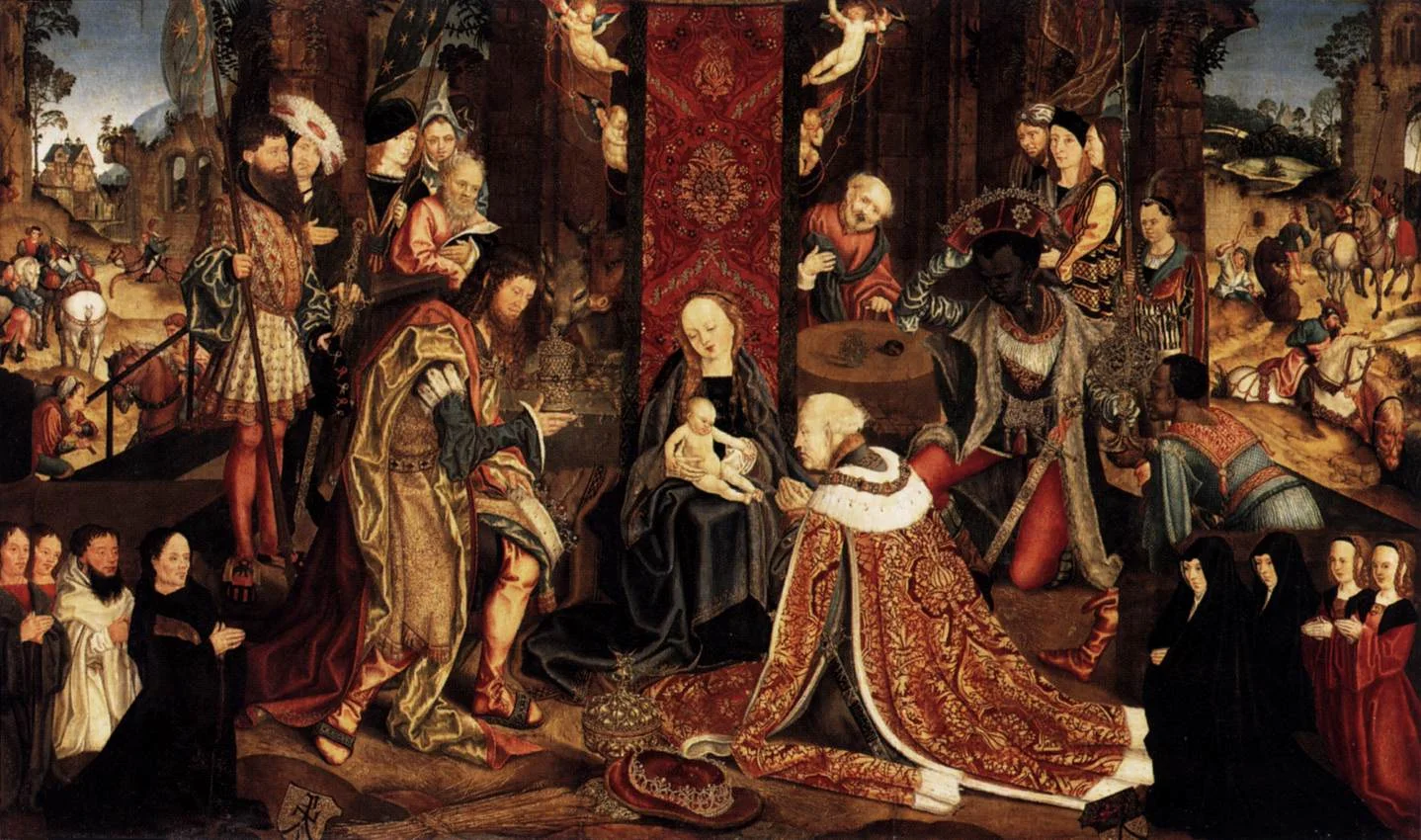
The celebration of Epiphany is the culmination of the Twelve Days of Christmas (January 6th).  The word literally means “revelation” or “sudden unveiling,” and Epiphany commemorates the day when wise men from the East came to Bethlehem, guided by the miraculous star.  The magi, it seems, were the first to comprehend that Jesus was not merely the fulfillment of Jewish hopes, but the Light of the World, the joy of every man’s desiring.  They beheld the glory of God in the City of David, the Savior was born.  Epiphany is the celebration of that good news.

In Epiphany, we not only see the unveiling of the good news of Christ to the wise men, but the unveiling of Christ to the nations; the proclamation of salvation to all the nations.  And, what good news it is!  It begins with the wise men, but goes so much further.

In Acts chapter 10, Peter has the strange vision in which he is commanded to eat the unclean animals, and comes to understand that God is speaking, not just of food, but of the Gentiles themselves.  In verses 34-35, Peter says, “Truly I understand that God shows no partiality, but in every nation anyone who fears him and does what is right is acceptable to him.”

Paul makes a similar declaration in Ephesians 3.  There he refers to himself as an apostle to the Gentiles and says that it has been given to him to proclaim the “mystery of the Gospel.”  In verse 6, he says, “This mystery is that the Gentiles are fellow heirs, members of the same body, and partakers of the promise in Christ Jesus through the gospel.”

There are numerous other passages that could be examined in light of this, but one more will suffice to echo the beauty of this; that God would extend His mercy and redemption beyond Israel to all the nations; that He would graft us in through the death and resurrection of His Son, Jesus.  Ephesians 2:11-16 says:

Therefore remember that at one time you Gentiles in the flesh, called “the uncircumcision” by what is called the circumcision, which is made in the flesh by hands — remember that you were at that time separated from Christ, alienated from the commonwealth of Israel and strangers to the covenants of promise, having no hope and without God in the world.  But now in Christ Jesus you who once were far off have been brought near by the blood of Christ.  For he himself is our peace, who has made us both one and has broken down in his flesh the dividing wall of hostility by abolishing the law of commandments expressed in ordinances, that he might create in himself one new man in place of the two, so making peace, and might reconcile us both to God in one body through the cross, thereby killing the hostility.

We were once “separated” and “alienated” from Christ, but now we “who once were far off have been brought near by the blood of Christ.”  How wonderful!  “He himself is our peace,” and He has tore down the walls of separation that once divided Jew from Gentile, bringing us together as His one people.  Christ has “reconciled us…to God in one body through the cross.”  That is what Epiphany is all about!  That is why it matters!

So, now what are we to do?  How should we or could we celebrate Epiphany?  Scripture does not give us specific requirements that must be observed in celebrating Epiphany, but Church history is quite helpful here.  So, here are some ideas and principles to keep in mind.

  • Be sure to teach your children – The days God commanded Israel to observe were opportunities for teaching the children. Why do we observe this day? Why are we doing these things? Teach your children about Epiphany so it doesn’t become a simple matter of routine, but a true tradition.

  • Feast & celebrate – If you study Epiphany throughout Church history, you will see that one thing is certain: it is a day of feasting. In fact, while there is no set menu, the common elements were beer and wine, lots of chocolate, and a King’s Cake (some quite elaborate and others quite simple). Christmas decorations are often taken down on Epiphany, but amid the singing of carols and hymns. Even though the decorations come down, they come down in celebration that the Light of the World has come and, though the season ends, life in the light of Christ continues.

  • Remember & be thankful – Israel observed special days so they would not forget (the most common sin they are charged with in the Old Testament), and we too must learn to remember the goodness of God. Epiphany is a time to celebrate the good news that Christ has come to save. He has extended His grace even to us Gentiles, grafting us into the true olive tree, making us the new Israel, reconciling us to God by the cross. Remember and be thankful!

Wisdom for Teenagers, Part Three - Friendship & Temptation

Wisdom for Teenagers, Part Three - Friendship & Temptation

Blogging through Joshua Gibbs’ A Parley with Youth

By Brian Phillips

Gibbs: How does spiritual strength manifest itself?

Taylor: In overcoming temptation.

Gibbs: And what is the best way to overcome temptation?

Taylor: With prayer.

Gibbs: I disagree.

Taylor: Are you serious?

Gibbs: Maybe. What sort of prayer do you mean?

Taylor: Prayers for wisdom.

Gibbs: Then, yes, I am serious. If a man is confronted by profound temptations, the last thing he should do is sit down, make himself comfortable, and begin praying for wisdom.

Taylor: What should he do?

Gibbs: Accept the wisdom God has already given you in the Scriptures, in the writings of the great saints, and in the chapter on common sense which is written in the book of nature.

Taylor: And what is that wisdom?

Gibbs: Run. Do what Eve should have done. When you get to a safe distance, begin praying that you would not invent specious reasons to go back. When Joseph was tempted to sleep with Potiphar’s wife, he didn’t pray the temptation would pass.”

____________________________________________

The second dialogue in the Joshua Gibbs’s A Parley with Youth introduces “Taylor,” a student who comes to Gibbs seeking advice on what to do about a friend who is going astray – drinking, cheating on tests, disrespecting teachers, and taking advantage of his parents’ trust. And, over the course of the dialogue, a couple (to name only a couple) of important misunderstandings – or outright foolishness – are revealed.

Confusing “Niceness” with Genuine Friendship

Taylor reveals that he has spoken with his youth pastor about the wayward friend and was told that “we shouldn’t give up on him. We should surround him, love him, and have confidence that righteousness is stronger than sin.”

Gibbs replies, “That sounds like what youth pastors say” and goes on to emphasize that such platitudes do little to actually address the problem, which is the young man’s sin.

Gibbs: Are you keeping him accountable now?

Taylor: What do you mean?

 Gibbs: Have you confronted him on his sin? Have you told him you want no part in his sin? Have you told his parents what he’s doing? (The answer, sadly, is no…so, Gibbs continues) … Thus far, I am not sure what he needs you for.”

It is true that friends do not abandon one another, but when a friend goes astray, the one who does not warn him is the one who truly abandons him. “A friend loves at all times, and a brother is born for adversity” (Proverbs 17:17).

And, as Solomon also says, “Better is open rebuke than hidden love. Faithful are the wounds of a friend; profuse are the kisses of an enemy” (Proverbs 27:5-6). To put it bluntly, Taylor was showing himself to be an enemy of the young man going astray.

Ecclesiastes 4:9-10 says, “Two are better than one, because they have a good reward for their toil. For if they fall, one will lift up his fellow. But woe to him who is alone when he falls and has not another to lift him up!” Modern empathy culture (including the fictional youth pastor) advises that, when a friend has fallen, it is best to simply fall down next to them to make sure they don’t get lonely down there. True friendship lifts up. True friendship acknowledges the fall and picks up the fallen brother.

The youth pastor’s advice to “surround him, love him” without confronting the actual sin is like giving a man a hug to make him feel better about his self-inflicted gunshot wound. Niceness has become, to many Christians, a substitute for actually helping those who have fallen.

The wayward young man did not need prayers for wisdom, he needed to repent and be told to run away from temptation when it comes again (because it will). He did not need to simply be “surrounded” with friends who would say loving things, he needed them to love him enough to tell him the truth.   

Misrepresenting the Ministry of Jesus

As the dialogue continues, Taylor excuses his approach with that frequently repeated mantra, “But Jesus hung out with sinners and prostitutes!”  

Matthew 9:10-11 records one instance used to back up such a claim. “Now it happened, as Jesus sat at the table in the house (with Matthew), that behold, many tax collectors and sinners came and sat down with Him and His disciples. And when the Pharisees saw it, they said to His disciples, ‘Why does your Teacher eat with tax collectors and sinners?’”

This text (as well as the similar situation in Luke 15:1-2) does not show Jesus “hanging out” with sinners. Rather, they come to Him because they are in need of forgiveness. And (in stark contrast to Taylor) Jesus called them to repentance. He did not make them feel better about their sin and leave it there.

Gibbs: Hanging out with sin does not “cover” sin. You are too embarrassed of righteousness to actually cover sin. Your proposal for treating this young man’s sin – or your youth pastor’s proposal, rather – bolsters sin and ultimately adopts it. It astounds me how often young Christians take the claim “Jesus hung out with prostitutes” to mean, “What God really wants is for me to play Xbox and watch Netflix with my worldly friends. If I play Xbox with them for long enough, eventually they’ll become Christians.”

As Gibbs goes on to point out, the characterization of Christ’s ministry as “hanging out” with sinners is not only inaccurate; it is dangerous.

Gibbs: I hear about the importance of establishing long-term friendships with the lost before preaching the Gospel to them all the time from naïve, tender-hearted Christians who are just going off to college. They honestly believe they ought to seek out homosexuals for friends, live with them in a loving and close-knit community for several years, and then finally break it to them that God does not approve of their lifestyle.

Taylor: What’s wrong with that?

Gibbs: It doesn’t work. After a few years, the Christians in question no longer believe homosexuality is a sin. They come back home after college saying, ‘Everything changes once you actually get to know someone who is gay. Many of them are good, kind people in genuinely loving relationships, just like straight people.’ That’s how friendship works, though. That’s how influence works. As a teacher, I see it all the time. If an obedient student and a disobedient student become friends, the obedient student will become disobedient. Not the other way around. If you put a person with influenza in the same room as a healthy person, it is the influenza that rubs off, not the health.”

Now what? Things for teenagers to consider or discuss:

  • What makes someone a “good” friend? By that definition, are you a good friend?

  • How should you respond if a friend is in open, self-destructive sin?

  • Have you surrounded yourself with friends that will make you wiser? Friends that are good for your spiritual condition and obedience to God?

  • Gibbs describes Christians who befriend unbelievers in the name of “sharing the Gospel” but end up going astray themselves. Have you seen this happen? What can you learn from it?

A Bit about St. Nick

A Bit about St. Nick

Reposted from The CiRCE Institute, with permission and with additions. 

December 6th is the feast of St. Nicholas!

by Brian Phillips

Santa Claus stands as a centerpiece of the Christmas season and though the feast of Saint Nicholas lasts but one day (December 6th), the Santa frenzy will continue through the holidays. Children around the world will find it hard to sleep, anxiously waiting for him to swoop down the chimney, leaving presents under the tree. But, where did the idea of gifts from jolly ole Saint Nick come from? The tradition stems from an event that vividly displays the “gentler side” of Saint Nicholas.

Nicholas, the bishop of Myra, lived during the tumultuous fourth century, when both false teaching and the Roman Emperor continually assaulted the Church. Fascinating stories swirl around the life of Saint Nicholas, creating the portrait of an inspiring man. Orphaned when he was young, Nicholas’s wealthy parents left him a small fortune. As Nicholas grew older, he developed into a man after God’s own heart, passionate and compassionate, zealous for truth and mercy. His passion and zeal for truth compelled him to slap Arius the heretic across the face at the Council of Nicaea (“You’d better watch out…Santa Claus is coming to town”), but his compassion and mercy are the foundation for the more well-known tales of his life. These stories gave rise to Nicholas’s “alter-ego,” Santa Claus.

When not assaulting heretics (an act for which he later apologized), Nicholas ministered as a bishop with a true pastor’s heart. One night, while walking through the village where he lived, Nicholas heard a girl crying. He stopped to listen and overheard the girl lamenting the fact that her family was too poor to provide dowries for her and her two sisters. In those days, dowries were given from a father to the suitor of his daughter and young ladies had little prospect of marriage without one. Unable to bear the girl’s sadness, Nicholas filled a bag with gold coins and tossed it into the poor family’s house, providing enough for the girl’s dowry. The following two nights, he did the same for the two younger sisters. All three girls were married the following spring, thanks to the mercy and generosity of Bishop Nicholas. The family never knew who provided the money.

Details of the story vary. Some say the bags of coins were thrown down the chimney, giving rise to the idea that Santa Claus comes down the chimney to leave presents. Others suggest that the coins landed in shoes or stockings left by the fireplace to dry, inspiring the practice of putting out stockings or shoes for Santa to fill with gifts. But all agree that the life of St. Nicholas is a model of compassion and generosity, of loving your neighbor as yourself. May his story inspire us to do the same.

Ideas for observing the Feast of St. Nicholas:

1) Fill a boot (we use a plastic "Santa" boot) with chocolate coins and put it by your fireplace or Christmas tree for the kids to enjoy.  It's a great time to retell the story of St. Nicholas.

2) Host a lunch or dinner for friends or neighbors and tell the story of St. Nicholas while feasting.  It's a great way to extend hospitality, show generosity, and everyone gets to remember the life of a great man.

3) Practice kindness to the poor. Make St. Nicholas’s feast day a time for donating money or goods to the poor, or try volunteering at a shelter or organization which helps those in need.

Hanging of the Green - 2025

Hanging of the Green - 2025

After worship on Sunday, November 23rd, we will gather for the Hanging of the Green - decorating the church for the coming Advent and Christmas seasons, including the Advent wreath and the church Christmas tree.

The Christmas tree is deeply rooted in Christian tradition, going back at least to the story of St. Boniface, an 8th century missionary to modern-day Germany, a region controlled by Norsemen who brought their religion with them.  They worshiped many gods, Thor being the chief of them and they consecrated a gigantic oak tree in Thor’s honor at the top of Mt. Gudenberg. They would gather around the tree for feasts, idol worship, and animal sacrifices.

St. Boniface, in the company of these pagans, chopped down the tree. Angry at first, the response of the Norsemen turned to repentance – if Thor could not defend his own holy place, what good was he?

Boniface then used that tree as an object lesson to tell them of a tree that actually does save, not because the tree was magic, but because on that tree, Jesus Christ died for the sins of men. That tree, Boniface said, is an evergreen, an eternal tree.  Many Norsemen were converted to Christ and it was there that they began the practice of decorating evergreen trees (even in their homes) in celebration of the Savior's birth.  Increasingly, the tree became a focal point in the home and gifts were laid under it, not in honor of the tree, but in honor of the Savior who died on the tree. It is His birth that we celebrate during Advent and it was for our sins that He died on the tree, the cross.

When: Sunday, November 23rd, after morning worship

Wisdom for Teenagers, Part Two - No Magic Switch

Wisdom for Teenagers, Part Two - No Magic Switch

A series of reflections on A Parley with Youth by Joshua Gibbs

By Brian Phillips  

My wife and I have been blessed with four wonderful children, all born relatively close together. I can vividly remember trips to the grocery store - children surrounding the cart, sympathetic looks from fellow shoppers, and the frequent “You’ve got your hands full” comments (to which my wife always replied, “Yes. Full of good things.”).

Those days feel like yesterday, yet three of them are now teenagers – a fact which still garners sympathetic looks and “You’ve got your hands full” comments. We have traded diaper changes for college visits, high chairs for driver’s licenses. In other words, yes, our hands are full, but still “full of good things.”

Parenting teenagers requires great wisdom because being a teenager requires wisdom. For the first time in their lives, teenagers find themselves caught between two worlds – childhood and looming adulthood. They drive cars, which if not handled well, could bring lifelong consequences. They will make college and job decisions, vote, possibly move out, begin dating/courtships – all matters which are far heavier than anything they have handled before.

And one obstacle to making wise decisions as teenagers is how they view themselves. As Joshua Gibbs points out, many teenagers seemingly view adulthood or maturity as something that “happens,” like a switch is flipped. He notes, “teenagers are often quite horrified when they learn that many adults still struggle with the sins that beset them in high school, for most teenagers believe they will naturally become good and responsible as soon as they marry.”

While it is true that some sins become less appealing with age, it is also true that age does not automatically grant growth in wisdom and godliness. Any honest adult would acknowledge the “sins of youth” (Psalm 25:7), but would hasten to add that the sins of youth are not their only sins. Additionally, sometimes the sins of youth follow you into adulthood.

Gibbs continues, “While they believe they will be good as soon as they become adults, most Christian teenagers are willing to admit they sin more this year than last, and that they sinned more last year than the year before, and the same is true of every year going all the way back to the age of seven or eight. When you point this out to a roomful of teenagers, they are dumbfounded, for most have secretly known this for quite some time and are surprised to see all their peers soberly agree.”

Realizing that who you are right now will determine who you are next week, next year, and so on. There is no magic metamorphosis that occurs at high school graduation, college graduation, or marriage (speaking of godliness, not covenantal standing). If you are going to be a wise and godly man or woman, the habits of wisdom and godliness must be developed now.

We often ask our teenagers, “What kind of man or woman are you going to be? Who are you in the story God is telling?” Be that man or woman now. If you have a specific destination in mind, you have to take steps to get there.  

Proverbs 20:11 says, “Even a child makes himself known by his acts, by whether his conduct is pure and upright.” Solomon’s point is not merely a matter of reputation, but of character. Our conduct as children or teenagers, creates patterns, ways of thinking, priorities, that are very difficult to unlearn. This is why Solomon, likely years later, advised, “Remember also your Creator in the days of your youth…” (Ecclesiastes 12:1).

Now what? Things for teenagers to consider:

·      When you are a grandfather or grandmother, what kind of life do you want to have? What would you want your children and grandchildren to think of you?

·      Once you answer that, work backwards. What kind of habits and behavior would lead me there? How should I live today if I am going to become a wise and godly man or woman?

·      If I continue in my current patterns, habits, and priorities, where will they lead me? Is that really where the Lord would have me go? Is that the kind of life God has called me to pursue?   

Wisdom for Teenagers (Part One)

Wisdom for Teenagers (Part One)

Blogging through Joshua Gibbs’ A Parley with Youth

by Brian Phillips

Wisdom literature is strikingly different than other genres, both in Scripture and beyond. The biblical wisdom writers observe the world, reflect and meditate on God’s truth, thinking about the patterns of the world, the human condition, and how God would have us to live in His world. 

For example, the book of Proverbs, written almost entirely by King Solomon, is an intensely practical book, addressing how we think, speak, and act. It speaks of anger, gossip, self-control, marriage, parenthood, adultery, wisdom, foolishness, the power of the tongue, government, finances, habits, community, reputation, and more.

Other wisdom literature, such as the Meditations of Marcus Aurelius, focuses less on prescribed behavior for others in favor of self-reflection and exhortation. Marcus’ Meditations are essentially his personal journal. Yet, though differing in structure, both types of writings are seeking the same thing: wisdom.

So…what is wisdom?

The first time Scripture speaks of wisdom, it does so in ways we may not expect. In Exodus 28:3 – “And you shall make holy garments for Aaron your brother, for glory and for beauty. You shall speak to all the skillful, whom I have filled with a spirit of skill, that they make Aaron's garments to consecrate him for my priesthood.” The “spirit of skill” is the word commonly translated as “wisdom,” but notice that it is used in reference to the ability to do a specific thing well – making priestly garments.

In Exodus 31:2-5, the word is used in a similar context – “See, I have called by name Bezalel the son of Uri, son of Hur, of the tribe of Judah, and I have filled him with the Spirit of God, with ability and intelligence, with knowledge and all craftsmanship, to devise artistic designs, to work in gold, silver, and bronze, in cutting stones for setting, and in carving wood, to work in every craft.” The word “ability” is “wisdom.” Exodus 35:31 translates it as “skill.”

Wisdom, then, is not merely the ability to think well, not some nebulous “form.” It is the ability to live life skillfully. Wisdom means not just knowing what should be done, but also having the character and ability then to do it. It is not enough to simply have knowledge or understanding; we have to have the courage to act on the right thing – that is wisdom.

In 1st Kings 3:9, when Solomon asked for an “understanding heart” he literally asked for a heart that hears; a heart that can call together or gather together all that is needed to choose what it right. That is wisdom, understanding, knowledge, and discernment.

It is this kind of “understanding heart” that Solomon wanted to pass along to his “son” in Proverbs. The early chapters contain multiple direct calls for his son to “hear” his father’s call for wisdom (1:8), “receive” his father’s words (2:1), and to remember his father’s instruction (3:1).

And while no human being ever truly “arrives” at wisdom (we can never have too much, or even enough, wisdom), the varying ages and stages of life do bring their own unique challenges that must be met with wisdom. And, as every adult knows, the teen years bring drastic changes in life for which few seem prepared. For teenagers, potential pitfalls abound – peer pressure, clothing choices, social media, music, dating, the dark corners of the internet, prevalent pornography, looming college and/or job decisions, and many more.  

A Parley with Youth by Joshua Gibbs. Credit for cover photo and title photo to CiRCE Press.

Joshua Gibbs’ 2024 book A Parley with Youth, aims to address some areas of life in which high schoolers need particular wise counsel. As the book’s subtitle indicates (Dialogues with High School Students about Virtue), each chapter is structured as a dialogue between Gibbs (a high school teacher, consultant, and writer with almost 20 years of experience) and fictional students.

In the following articles, I will highlight some of the wisdom Gibbs shares throughout the book, with the hope you will simply read the rest. I would encourage you to do so. But, for now, here is a fitting quote from his introduction:

“When advising teenagers on spiritual problems, adults tend toward clichés about ‘loving God more’ or ‘having more faith,’ but shy away from telling students to throw their video game consoles away and quit social media. Worse still, many Christian adults have given themselves over entirely to the psychologization of sin, especially when dealing with their own children. Cowardice is ‘fear of failure.’ Pride ‘doesn’t respond well to criticism.’ Nearly any personality quirk or idiosyncrasy, no matter how destructive or debilitating, is the morally neutral result of being introverted, extroverted, or stressed. Even Republican parents who otherwise complain about safe spaces, snowflakes, and welfare bristle at the word ‘punishment,’ insist on ‘consequences,’ and often argue that their own children should not receive consequences but ‘grace’ whenever they break the rules.”

The dialogues in A Parley with Youth not only offer answers to high schoolers, but also a pattern for parents, teachers, and church leaders to follow in discipling them. As shown in the quote above, Gibbs approaches these dialogues with honesty, sharp wit, and biblical wisdom.

To be continued…    

What It Means to Be King: Leadership in "The Horse & His Boy"

What It Means to Be King: Leadership in "The Horse & His Boy"

The Horse and His Boy, the third book in The Chronicles of Narnia series, tells of Prince Cor’s return to Archenland. The long lost prince began his nostos in Tashbaan, proceeded through the desert, and finally arrived in Anvard, the Archenland capital. But, much like Odysseus, the celebration of Cor’s return is delayed by fierce battle against enemies who threaten his home and kingdom.

When the dust of battle settles, Cor is more properly reunited with his father, King Lune, and hears the news that he will one day be king of Archenland. Cor’s reply is one of fear and even apology to his twin brother, Corin. “Oh dear,” said Cor. “I don’t want to at all. And Corin – I am most dreadfully sorry. I never dreamed my turning up was going to chisel you out of your kingdom.”

Corin, however, immediately rejoices, saying, “Hurrah! Hurrah! I shan’t have to be King. I shan’t have to be King. I’ll always be a prince. It’s princes have all the fun.”

King Lune, who is previously described as “the kindest-hearted of men” answers Prince Cor with both honesty and grace: “And that’s truer than thy brother knows, Cor. For this is what it means to be a king; to be first in every desperate attack and last in every desperate retreat, and when there’s hunger in the land (as must be now and then in bad years) to wear finer clothes and laugh louder over a scantier meal than any man in your land.”

Some long for leadership positions for what it can give them. Others understand leadership for what it really is, as King Lune did. Such lessons apply not only to kings and political officials, but to pastors, husbands, and fathers alike. May God help each to learn them, and then live and lead accordingly.

Worship & the Ordering of Life (Part Six)

Worship & the Ordering of Life (Part Six)

By Pastor Brian Phillips

Communion

We offer ourselves as burnt offerings, which were used for food, yet God does not “consume” us to our destruction, rather, He gives His own body and blood as food and drink for us.

While this marks a brief diversion, a powerful picture of this is found in the final canto of Dante’s Inferno. In Canto XXXIV, Dante and Virgil finally encounter the evil one, Satan himself – “the foul creature which once had worn the grace of Paradise,” “The Emperor of the Universe of Pain.” He is found encased in ice, with his head and wings jutting out. Struck with terror and awe at his appearance, Dante says:

            If he was once as beautiful as now he is hideous, and still turned on his Maker, well may he be the source of every woe! (Canto XXXIV.34-36)

Satan’s six wings, once used in his duty of worship (Isaiah 6:2), now help seal his doom. They jut out from his ice prison, flapping incessantly, stirring up the icy wind that actually strengthens the ice. The once who would “ascend” (Isaiah 14:12-20), is now the lowest, his wings serving only to keep him down.

Satan has three faces, a gruesome anti-Trinity, with each mouth eternally chewing upon history’s greatest traitors – Judas, Brutus, and Cassius.

            “That soul that suffers most,” explained my Guide, “is Judas Iscariot, he who kicks his legs on the fiery chin and has his head inside” (Canto XXXIV.61-63).

Judas committed treachery against the Lord, his sin akin to Satan’s, so his punishment is greatest. Brutus showed treachery towards his friend, Julius, by conspiring against him. 

            Of the other two, who have their heads thrust forward, the one who dangles down from the black face is Brutus: note how he writhes without a word (Canto XXXIV.64-66).

Brutus, who at least in Shakespeare’s Julius Caesar, won supporters with his words, is now unable to speak. His treachery against Julius, in Dante’s valuation, has no defense. Cassius’ crime involves treachery towards his country. Brutus was a friend of Caesar; Cassius was a fellow countryman.

So, here dwells Satan, at the very bottom of Hell, gnashing his teeth upon those who followed him most closely. This “eternal dinner” pictures a counterfeit communion, a hellish wedding feast, in which Satan feasts upon his followers – the reverse of Christ, who gave His body and blood as spiritual food (bread and wine), leading to eternal life (John 6:53-58).

In the average Protestant or Evangelical church, the sermon is followed by an altar call or prayer, maybe a closing song, and the service concludes. In other words, the service ends with the burnt offering or Consecration.

But as we have seen in the liturgical order of Leviticus 9, worship does not stop at the burnt offering. After the burnt offerings, Leviticus 9:18-21 continues,

Then he killed the ox and the ram, the sacrifice of peace offerings for the people. And Aaron's sons handed him the blood, and he threw it against the sides of the altar. But the fat pieces of the ox and of the ram, the fat tail and that which covers the entrails and the kidneys and the long lobe of the liver— they put the fat pieces on the breasts, and he burned the fat pieces on the altar, but the breasts and the right thigh Aaron waved for a wave offering before the Lord, as Moses commanded.

The “peace offerings” are sometimes called thank offerings. Leviticus 3 says several times that these are burned on the altar “as food” (Lev. 3:11, 16). The “fat was the Lord’s” (Lev. 3:16) but the rest is to be eaten by the worshiper when it is offered (Leviticus 7:11-18). The peace offerings were a sign of fellowship with God and the other worshipers.   

Corresponding to the peace offering, we feast together in the communion meal at God’s invitation. The bread and wine are gifts from God to His people. We have peace with Him through the body and blood of His Son. We partake of the bread, His body, and the cup of blessing, His blood.

We greet one another as we come to the Table in the short responses we do each week – “The Lord be with you…And also with you” – called “The Great Thanksgiving.” We pray before the feast, a prayer called “The Prayer of Thanksgiving” because we are preparing to partake of the peace offering, the thank offering.

For the same reasons, we sing during communion – and not sad, funeral dirge songs. The Eucharist is no mere memorial, where we remember the death of Jesus. We are communing with our Savior, feasting with the King. He has already heard our confession, assured us of pardon, and received our consecration. We dare not come to His feast and sit silently staring at our belly button. This is why we also begin the feast with words: “Let us lay aside all earthly care, that we may receive the King of all!”

Communion reminds us that we are in need, but also that we are part of a body given to meet those needs. The sermon is not the high point, but it reminds me that I need Jesus. Communion, however, brings us to Jesus. We come to the table to partake of the body and blood of Christ, the bread and wine. And, in doing so, He reminds us that He was given for us – to heal our souls and to make us like Himself. We are sinners, but we are sinners loved by Jesus. Our souls are hungry and thirsty, but Jesus feeds us and gives us drink. We are weak, but He makes us strong. We are forgetful of His goodness and mercy, so He gives them to us week after week.

And we are given communion together, which reminds us that we are not alone. We are needy people, but Jesus is here and He has given us Himself and His Church to meet our needs.

To be continued…

The Significance of Christ's Ascension

The Significance of Christ's Ascension

From the very beginning, God has ordered our days. In the Creation week, He made the sun to rule the day and the moon to rule the night. He rested on the seventh day, giving us a pattern of work and rest to follow in our own lives. Our calendars have, however, become far more numerous and complicated - work calendars, family calendars, and school calendars now direct how we spend our time. Sadly, the Church calendar is rarely the one setting the rhythm of life, even for Christians.     

Yet, the Church calendar, with its repetition of fasting and feasting, prepares us and trains us for every season of life – times of suffering (fasting) and times of rejoicing (feasting). It also reminds us that the center of life is Jesus. 

One important, but often overlooked (at least by many evangelicals) Church feast is Ascension. Christ ascended into heaven forty days after His resurrection, after appearing to His disciples multiple times. It is significant to note that the Easter season is not one Sunday. Rather, it is a forty-day feast that begins on Easter Sunday and continues through Ascension. There is a day of Easter feasting for every day of Lenten fasting…plus some. Easter’s forty days lead to the feasts of Ascension and Pentecost (ten days after Ascension).  

Shortly before Jesus ascended into heaven, the disciples asked Him, “Lord, will you at this time restore the kingdom to Israel?” The power they would receive, however, was not political. Jesus answered, “You will receive power when the Holy Spirit has come upon you, and you will be my witnesses in Jerusalem and in all Judea and Samaria, and to the end of the earth” (Acts 1:8). The word “witnesses” is the Greek term for martyr. Rather than earthly, political power, the disciples would be given the power to lay down their lives for Christ.

Through His ascension, Christ is seen as the substance of Old Testament shadows. The accounts of Acts and the Gospel of John give us two specific examples.

Christ’s Ascension & the Ark of the Covenant

“And when he had said these things, as they were looking on, he was lifted up, and a cloud took him out of their sight. And while they were gazing into heaven as he went, behold, two men stood by them in white robes, and said, ‘Men of Galilee, why do you stand looking into heaven? This Jesus, who was taken up from you into heaven, will come in the same way as you saw him go into heaven’” (Acts 1:9-11).

When Christ rose from the grave, He first appeared to Mary Magdalene, who returned to the empty tomb after Peter and John had departed. She wept outside the tomb, then stooped to look inside. “And she saw two angels in white, sitting where the body of Jesus had lain, one at the head and one at the feet” (John 20:12). The empty tomb is the new Holy of Holies, and place where the body of Jesus had lain is the new Mercy Seat. The angels sat on either side of the tomb because the empty tomb is the true Ark of the Covenant (with angels on either side). Additionally, when Peter and John arrived at the tomb, even though John was the first to arrive, he makes sure we know that Peter was the first to enter the tomb (John 20:4). This is significant because Peter was the High Priest who would deliver the sermon at Pentecost and call the crowds to repent and be baptized. He had to enter the Holy of Holies.

Now, back in Acts 1, as Jesus ascends and the Holy Spirit is to be sent, all the disciples are gathered and, while they stand there looking for Jesus (like Peter and John did), two angels stand by them. The disciples are high priests now, and they are going to minister in the true Holy of Holies – proclaiming the empty tomb and continuing the work of Christ in the power of the Holy Spirit. They can enter the Holy of Holies because Christ tore the veil, that is His flesh, and opened the Holiest Place through His resurrection.

Christ’s Ascension & Elijah

In 2nd Kings 2, Elijah and his apprentice, Elisha, are walking together and, as they arrive at the Jordan River, Elijah takes off his cloak, rolls it up, strikes the water, and the water was parted so they could walk over on dry ground. This should remind us of Moses and the Red Sea, as well as Joshua and the Jordan River (Joshua 3:16).

“When they had crossed, Elijah said to Elisha, ‘Ask what I shall do for you, before I am taken from you.’ And Elisha said, ‘Please let there be a double portion of your spirit on me.’ And he said, ‘You have asked a hard thing; yet, if you see me as I am being taken from you, it shall be so for you, but if you do not see me, it shall not be so.’ And as they still went on and talked, behold, chariots of fire and horses of fire separated the two of them. And Elijah went up by a whirlwind into heaven. And Elisha saw it and he cried, ‘My father, my father! The chariots of Israel and its horsemen!’ And he saw him no more” (2nd Kings 2:9-13).

Elijah is about to be taken up into heaven, and Elisha asks for a double portion of his spirit to come upon him, so he can continue the work of Elijah once Elijah is in heaven. This was not selfishness on Elisha’s part. By asking for a “double portion,” he was not being greedy. He was being humble. Elisha knew that, in order for him to carry on the work of Elijah, he would need a double portion. In the same way, as Jesus prepared to ascend into heaven, He does not leave His disciples helpless or powerless. He leaves them the Holy Spirit to continue to empower them to continue His work. And, just as Elijah went up into heaven with the flaming chariots, so the Holy Spirit would descend as tongues of fire at Pentecost.

When Elijah ascends into heaven, his spirit is given to Elisha and, 2nd Kings 2:13-14 say, “Then he took hold of his own clothes and tore them in two pieces. And he took up the cloak of Elijah that had fallen from him and went back and stood on the bank of the Jordan. Then he took the cloak of Elijah that had fallen from him and struck the water, saying, ‘Where is the Lord, the God of Elijah?’ And when he had struck the water, the water was parted to the one side and to the other, and Elisha went over.” Elisha is able to do what Elijah had done.

In the same way, the Holy Spirit is given to the disciples and to the Church to continue doing what Jesus did – lay down His life for those the Father had given Him. We are called to do the same where God has put us, in the time He has given us, for the people He has given us – for our spouse, our children, our neighbors.

And as we labor on, laying our lives down for the Lord and others, the ascended Christ who sits at the right hand of the Father intercedes for us.

Worship & the Ordering of Life (Part Five)

Worship & the Ordering of Life (Part Five)

By Pastor Brian Phillips

The Consecration

Following the Confession of Sin and Assurance of Pardon, we enter into Consecration, the longest portion of the worship service (primarily because it contains the sermon). Consecration corresponds to the burnt offerings which, as Leviticus 9:15-16 says, were to be offered after the sin offerings. The burnt offerings were to be totally consumed (Leviticus 1:8-9), used for food, and the aroma of them was “a pleasing aroma to the Lord” (Leviticus 1:9, 13, 17).

We refer to this part of the liturgy as the “Consecration” because it is marked by the complete giving over of ourselves to God, particularly by hearing and submitting to His Word. We hear the Scriptures, from the Old Testament, Epistle, and Gospel readings (following the Lectionary to ensure we hear the same passages read in the Church around the world).

A few things should be noted about the reading of the Scriptures in corporate worship.

First, the readings should be heard, not simply followed. While we do encourage parishioners to bring their Bibles to worship with them to follow along in the sermon (following the example of the Bereans in Acts 17:10-12), learning to hear the Word is a vital discipline. It encourages mental discipline and aids memory.

Second, there should be multiple readings (multiple witnesses). Deuteronomy 19:15 says, “Only on the evidence of two witnesses or of three witnesses shall a charge be established.” In that context, it is referring to accusations of crime. But, in Matthew 18:16, Jesus applies it to Church discipline as well, saying, “But if he does not listen, take one or two others along with you, that every charge may be established by the evidence of two or three witnesses.” The Apostle Paul does the same in 2nd Corinthians 13:1 – “Every charge must be established by the evidence of two or three witnesses.”

Finally, the Lord Jesus applies this same requirement to His testimony about Himself. He said, in John 5:31-33, “If I alone bear witness about myself, my testimony is not true. There is another who bears witness about me, and I know that the testimony that he bears about me is true. You sent to John, and he has borne witness to the truth.”

The Bible itself should be seen as a multitude of witnesses – Old Testament and New Testament. This is why the Church has historically had multiple readings in the worship service (Old Testament, Epistle, and Gospel). To make the point clearer, the readings are done in a multitude of places (behind the lectern and standing in front of the congregation), and often by multiple readers (a clear multitude of witnesses – in person and voice).

Third, we stand for the Gospel readings. There is an ancient habit of standing for the Gospel reading, not because the Gospels are more inspired or more important than the rest of Scripture, but because the Gospels record the words and actions of Christ, who is the Word of God incarnate. So, the practice of standing is not just a physical sign of respect, it is also showing reverence for the whole Word of God – written and incarnate. The Gospels tell of how Christ walked, healed, ate, blessed, spoke, suffered, died, rose in His body. So, it is fitting that as we hear of these things, we respond with our bodies.

Fourth, the readings must be seen as a necessary part of worship. In 1st Timothy 4:13, Paul tells Timothy, “Until I come, devote yourself to the public reading of Scripture, to exhortation, to teaching.” Interestingly, in the Greek text, each of the three areas Paul mentions – reading, exhortation, teaching – have a definite article in front of them. In other words, Paul is telling Timothy to devote himself to “the readings, the exhortation, and the teaching,” as if each of them were specific duties. Luke does the same in Acts 2:42 when he describes the life of the Church immediately following Peter’s sermon at Pentecost – “And they devoted themselves to the apostles’ teaching and the fellowship, to the breaking of bread and the prayers” (emphasis mine). These are definite duties required of the Church – the readings, the teaching, the exhortation, the fellowship, the breaking of bread (communion), and the prayers were all specific times and responsibilities.   

At the conclusion of the readings, the congregation responds, “This is the Word of God.” In so doing, we are acknowledging that we do not follow our own wisdom, authority, and thinking, but God’s – and that in its entirety, Old and New Testament alike. 

In consecration, we do not offer up an animal sacrifice to be consumed (Hebrews 10:11-14). We are the “living sacrifice” (Romans 12:1-2) and we offer ourselves up entirely, in complete submission to God and to His Word. We follow the readings with the preaching of the particular Word, the sermon text. The sermons are centered on the text of Scripture and ended with a prayer of commitment (again, notice the pattern of submission and consecration). This all parallels the burnt offerings.

The sermon, by its very structure, takes more time than any other single aspect of the liturgy. This, combined with the heavy emphasis of the Reformation on the supremacy and sufficiency of the Word of God, has led most to conclude that the sermons must, therefore, be the most important part of the worship service. That is not the case.

The sermon is important. As we have already seen, Paul told Timothy to “devote” himself to particular duties, one of them being “the teaching.” He commands him, in 2nd Timothy 4:1-2, to “Preach the word; be ready in season and out of season; reprove, rebuke, and exhort, with complete patience and teaching.”

So, I am not saying the sermon is unimportant. Rather, I am saying it is not the most important part of the service. Such a statement would likely leave many American Christians speechless. Allow me to offer a few more thoughts here.

First, in a Biblical liturgy, the Scriptures fill the worship service. If you have paid attention to any of the previous essays in this series, you should notice that, by the time we get to the sermon, the congregation has already been given a steady diet of Scripture. The service begins with Scripture, the Call to Worship is taken from Scripture, the congregation reads a Psalm selection responsively, the exhortation before the Confession of Sin is drawn from Scripture, the Assurance of Pardon is proclaimed through Scripture, and the congregation sings from the Psalms.

All of that happens before we even get to the public readings from the Old Testament, Epistles, and Gospels!

So, lest anyone think that I am advocating a turn from Scripture, I would simply say, “Check the tape.” Covenant Renewal Worship (the liturgy being described in this series) is absolutely soaked in the Bible, and this is not surprising, because its pattern is drawn from the Bible.

Second, the sermon cannot be the “main event” because of its place in the liturgy. The sermon is part of the Consecration, but if we return our minds to Leviticus 9 (from whence we get this whole pattern for worship), we see that there are still more offerings to be made – the grain offering (Leviticus 9:17) and the peace offering (9:18) must be offered, and the benediction must be pronounced (9:22). While we will discuss those in more detail in later essays, the point for now is simply that the sermon cannot be the end or the culmination.

The sermon is concluded with prayer and then the congregation responds with the Lord’s Prayer. In our congregation, we sing the Lord’s Prayer, but whether spoken or sung, it plays an integral role here because it is a prayer of submission and, even by praying exactly what Jesus said, we submit to His wisdom.

The offerings of the congregation are brought forward at this time, corresponding to the grain offering in both content and order (Leviticus 9:17). It is an offering to God, but it is largely for the benefit of the congregation, its ministry, needs, and pastor. Traditionally, a doxology is sung as the offering comes forward, recognizing that it is only through the blessings of God that we have anything to offer Him and His church.

The last part of the consecration section is our confession of faith. We recite one of the ecumenical creeds (Apostles’ Creed or Nicene Creed), and we do this because we are again pledging that we believe what Scripture says, from beginning to end. The creeds of the Church are accurate summaries of biblical teaching. So, when we recite them, we are confessing that we believe the whole counsel of God, the whole Word of God. We recite them in hopes of eventually having them memorized for the same reason (that our minds be given to God).

The Apostles’ Creed was originally recited by baptismal candidates or their parents (which is why it begins with “I believe”). The Nicene Creed was written to respond to Christological heresies in the 4th century (which is why it begins with “We believe”). In our congregation, we alternate recitation of the Apostles’ and Nicene Creed in order to aid in memorization of both, and to remind us that we are to submit to the truth of Scripture and cling to the faith both individually and corporately (both “I” and “We”).   

Reciting the creeds reminds us of our connection with the Church catholic (universal and historic). The problems of individualism and pragmatism have swallowed up American Christianity, and one way to avoid, or come back from, such problems is by consistently reminding ourselves of the stream of Christian history of which we are part. The Church is bigger than us. 

What does the Consecration teach us? What are we to take into the rest of life from this part of the service?

Submission to all of Scripture is a requirement. As one of my Baptist college professors was fond of saying, “The Bible is not a buffet line. You don’t get to just take a little of this or a little of that, and leave what you don’t like.” The liturgy teaches us this. We are to submit to all of the Bible for all of life.

Our lives should be saturated by the Bible. The whole liturgy teaches this, but the Consecration clearly emphasizes it. We should read it, hear it, sing it, memorize it, consult it, meditate upon it, talk about it, etc. As Deuteronomy 6 says, the truth of God’s Word should be with us when we talk, walk, lie down, and rise up. Being a “living sacrifice” (Romans 12:1 – note this is literally a “living dead thing,” dead to sin and self, alive to God) means we are “transformed” and our minds are “renewed” by God and His Word.

Practically, I would say this means taking steps in our lives to return to the ancient practice of morning and evening prayer, which includes multiple Scripture readings. The Book of Common Prayer is, in my opinion, the best resource for this.

No more “Lone Ranger” Christianity. One powerful result of submitting ourselves to the ancient practices of the Church, like the multiple readings from the Lectionary, reciting the Lord’s Prayer, and the Creeds, is that we are reminding ourselves that we are stones in a far bigger Temple, members of a much larger Body, the Church.

Modern evangelicalism, with its almost exclusive emphasis on individual salvation, entertainment, church hopping, and focus on personal feelings, is foreign to a Biblical view of worship and the life and habits of God’s people. Particularly in the Consecration, we are being reminded weekly that we do not belong to ourselves. We belong to Christ, but we belong to Him as part of His Bride. When we find any vestige of such cancerous individualism in ourselves or our congregations, we must confess it and ask the Lord to cut it out.

We are to be wholly given to the Lord. As we hear the readings and submit to them (“This is the Word of God”), hear the sermon and submit to (responding with the Lord’s Prayer), give of our finances in the offering, sing the Doxology (acknowledging that all of Creation and every blessing therein comes from the Triune God), we are being reminded that not a single aspect of life is to be held outside of submission to the Lord and His Word.   

To be continued…

More Echoes of Christ

More Echoes of Christ

Originally published by The CiRCE Institute (used by permission)

by Pastor Brian Phillips

Christ as Temple, Food, and the New Jerusalem

Only the Gospel of John records Jesus’ meeting with the woman at the well. Only John records Jesus’ declaration of Himself as “the living water.” Only John tells of the miracle at Cana – the turning of water into wine, an echo of baptism and the communion feast. Only John mentions Jesus’ conversation with Nicodemus, in which He says, “Truly, truly, I say to you, unless one is born of water and the Spirit, he cannot enter the kingdom of God.” And John’s is the only Gospel to record this detail of Christ’s crucifixion.

“Since it was the day of Preparation, and so that the bodies would not remain on the cross on the Sabbath (for that Sabbath was a high day), the Jews asked Pilate that their legs might be broken and that they might be taken away.  So the soldiers came and broke the legs of the first, and of the other who had been crucified with him.  But when they came to Jesus and saw that he was already dead, they did not break his legs.  But one of the soldiers pierced his side with a spear, and at once there came out blood and water” (John 19:31-34). 

Certainly, this detail echoes all of John’s previous allusions to Christ as water (4:13-14, 7:37-38), but it does much more.  The piercing of Christ’s side introduces another echo, back to Ezekiel 47.

“Then he brought me back to the door of the temple, and behold, water was issuing from below the threshold of the temple toward the east (for the temple faced east). The water was flowing down from below the south end of the threshold of the temple, south of the altar.  Then he brought me out by way of the north gate and led me around on the outside to the outer gate that faces toward the east; and behold, the water was trickling out on the south side.

Going on eastward with a measuring line in his hand, the man measured a thousand cubits, and then led me through the water, and it was ankle-deep.  Again he measured a thousand, and led me through the water, and it was knee-deep. Again he measured a thousand, and led me through the water, and it was waist-deep.  Again he measured a thousand, and it was a river that I could not pass through, for the water had risen. It was deep enough to swim in, a river that could not be passed through” (verses 1-5).

Christ is the water, but He is also the temple.  After Jesus entered the Temple in John 2, overturning the tables of the money-changers and swindlers, He told the disciples about His upcoming death and resurrection, describing it in these terms: “Destroy this temple, and in three days I will raise it up…but he was speaking about the temple of his body” (John 2:19, 21).  The real temple is Christ. 

While not recording the water and blood coming from Christ’s side, the other three Gospel writers describe the Temple veil, which is Christ’s flesh (Hebrews 10:19-20), being torn in two at His death (Matthew 27:51, Mark 15:38, Luke 23:45).   

Ezekiel continues:

“And he said to me, ‘Son of man, have you seen this?  Then he led me back to the bank of the river.  As I went back, I saw on the bank of the river very many trees on the one side and on the other.  And he said to me, ‘This water flows toward the eastern region and goes down into the Arabah, and enters the sea; when the water flows into the sea, the water will become fresh.  And wherever the river goes, every living creature that swarms will live, and there will be very many fish. For this water goes there, that the waters of the sea may become fresh; so everything will live where the river goes.  Fishermen will stand beside the sea. From Engedi to Eneglaim it will be a place for the spreading of nets. Its fish will be of very many kinds, like the fish of the Great Sea.  But its swamps and marshes will not become fresh; they are to be left for salt.  And on the banks, on both sides of the river, there will grow all kinds of trees for food. Their leaves will not wither, nor their fruit fail, but they will bear fresh fruit every month, because the water for them flows from the sanctuary. Their fruit will be for food, and their leaves for healing’” (verses 6-12).

Jesus is the Temple and the water flowing from Him waters the earth, filling it and producing food - fish, trees, and fruit.  If we are thirsty for righteousness, Jesus is living water that quenches the earth, and gives the Spirit of righteousness.  If we are hungry, Jesus brings forth food.  In fact, He is food, the bread of life.  “Truly, truly, I say to you, whoever believes has eternal life.  I am the bread of life.  Your fathers ate the manna in the wilderness, and they died.  This is the bread that comes down from heaven, so that one may eat of it and not die.  I am the living bread that came down from heaven. If anyone eats of this bread, he will live forever. And the bread that I will give for the life of the world is my flesh” (John 6:47-51). 

The picture of Christ as water, Temple, and food (not to mention light) finds completion in another of John’s writings, Revelation:

“And I saw no temple in the city, for its temple is the Lord God the Almighty and the Lamb.  And the city has no need of sun or moon to shine on it, for the glory of God gives it light, and its lamp is the Lamb.  By its light will the nations walk, and the kings of the earth will bring their glory into it, and its gates will never be shut by day—and there will be no night there.  They will bring into it the glory and the honor of the nations.  But nothing unclean will ever enter it, nor anyone who does what is detestable or false, but only those who are written in the Lamb's book of life.

Then the angel showed me the river of the water of life, bright as crystal, flowing from the throne of God and of the Lamb through the middle of the street of the city; also, on either side of the river, the tree of life with its twelve kinds of fruit, yielding its fruit each month. The leaves of the tree were for the healing of the nations” (21:22-22:2).

Christ Is the Garden

Christ Is the Garden

By Brian Phillips

Excerpt from the sermon on April 23rd, 2017 (Second Sunday of Easter) 
Also posted by The CiRCE Institute

In John 20, Mary Magdalene goes to Jesus’ tomb twice. The first time, she goes to anoint the body of Jesus (Mark 16:1), only to find the stone rolled back. Assuming that the enemies of Jesus had moved the body as one last insult, Mary ran to find the disciples, bringing Peter and John back with her.

Peter and John ran to the tomb, John arriving first, and there is something to this beyond St. John just wanting to point out his blazing speed. Remember the last time Peter had seen Jesus? It was after denying he even knew Jesus. Upon the third denial, Luke 22:61 says, “And the Lord turned and looked at Peter.” Perhaps those eyes slowed Peter’s feet?

The disciples both entered the tomb and found the folded grave clothes. They believed Mary’s report, but did not yet understand that Jesus had risen, so they went home. Mary, however, went back to the tomb. She “saw Jesus standing, but she did not know it was Jesus. Jesus said to her, ‘Woman, why are you weeping? Whom are you seeking?’ Supposing him to be the gardener, she said to him, ‘Sir, if you have carried him away, tell me where you have laid him, and I will take him away’” (John 20:14-15).

Mary assumed Jesus was the gardener because He had been buried in a garden. John 19:41-42 says, “Now in the place where he was crucified there was a garden, and in the garden a new tomb in which no one had yet been laid. So because of the Jewish day of Preparation, since the tomb was close at hand, they laid Jesus there.” Jesus was crucified, died, and rose again in a garden.

Jesus was also betrayed in a garden. John 18 tells us that Judas betrayed Jesus “across the Kidron Valley, where there was a garden” – the Garden of Gethsemane. Later, in the same chapter, Peter denies that he had been with Jesus “in the garden” (John 18:26).

Gardens have particular significance in Scripture. Genesis 2:8 begins, “And the Lord God planted a garden in Eden, in the east, and there he put the man whom he had formed.  And out of the ground the Lord God made to spring up every tree that is pleasant to the sight and good for food. The tree of life was in the midst of the garden, and the tree of the knowledge of good and evil.  A river flowed out of Eden to water the garden, and there it divided and became four rivers…The Lord God took the man and put him in the garden of Eden to work it and keep it.  And the Lord God commanded the man, saying, ‘You may surely eat of every tree of the garden, but of the tree of the knowledge of good and evil you shall not eat, for in the day that you eat of it you shall surely die.’”

Adam was given two sets of tasks. As the king over creation, Adam was to subdue and have dominion, bringing the creation into order for the glory and pleasure of God (by naming the animals, for example). As a priest, Adam was to “work” and “keep” the Garden – both words used for priestly service. It was in the Garden that Adam met with God. In other words, the Garden of Eden was a temple, a house of meeting and worship.

But, Adam failed in both his kingly and priestly duties. He failed to keep the Garden, allowing the Tempter to come in, to deceive his wife, and to take part in that deception as well. Rather than working and keeping the Garden, he submitted himself to the Garden’s one forbidden fruit. Rather than serving the God of that temple, he contented himself with the fruit (much like the Pharisees and money-changers who preferred the physical Temple in Jerusalem to Christ the Temple who dwelt among them). 

Because Adam failed, he was exiled from the Garden, removed from the temple. In 3:23 – “therefore the Lord God sent him out from the garden of Eden to work the ground from which he was taken.  He drove out the man, and at the east of the garden of Eden he placed the cherubim and a flaming sword that turned every way to guard the way to the tree of life.” Man could not enter that garden temple again. But, then Christ came. He alone could enter the garden temple, because He was the garden temple.

Adam betrayed God in the Garden, he was sentenced to death in the Garden, he was separated from God in the Garden, and then exiled from the Garden. Jesus was betrayed in a garden, killed in a garden, buried in a garden, but He rose again and left the garden – not in exile as Adam did, but in the triumph of resurrection. The first Adam lost the Garden, but the second Adam kept it and took dominion over it, a faithful King and High Priest.    

Good Friday Service

Good Friday Service

Almighty God, we pray you graciously to behold this your family, for whom our Lord Jesus Christ was willing to be betrayed, and given into the hands of sinners, and to suffer death upon the cross; who now lives and reigns with you and the Holy Spirit, one God, for ever and ever. Amen.

- Book of Common Prayer, Collect for Good Friday

Join us as we remember the crucifixion of Christ our Lord.

When: Friday, April 18th at 7:00 p.m.
Where: Holy Trinity Reformed Church
             3747 Trinity Church Road
             Concord, NC

Worship & the Ordering of Life (Part Four)

Worship & the Ordering of Life (Part Four)

By Pastor Brian Phillips

The Confession of Sin

Following the call to worship, we sing. Why? The children of Israel would have begun bringing their sin offerings up at that point, to the likely accompaniment of the ascent Psalms (Psalms 120-134). Those Psalms are sometimes referred to as Songs of the Steps, meaning they may have been sung by the Levites while ascending the 15 steps of the Temple to begin their service (and it is offered an explanation as to why there are 15 Psalms of Ascent).

While we, of course, do not have bull calves or goats to gather and prepare, we do still offer up the “sacrifice of praise” (Hebrews 13:5). So, as God’s people have always done, we respond to His call to worship with songs of thanksgiving, praise, and adoration. In addition to those Psalms of Ascent, our hymnal contains specific hymns for use during the call to worship: “Praise to the Lord, the Almighty,” “Joyful, Joyful, We Adore Thee,” “Holy, Holy, Holy,” and many more.

But immediately on the heels of those glad songs, we remember the “beasts” we brought with us into the sanctuary. Our beasts, as I have said, are not bull calves or goats, but beasts nonetheless – anger, lust, worry, harsh words, gossip, prayerlessness, sloth, and all other manner of sinful thoughts, words, and deeds. They need to be slain.

And so, as our song ends, we confess our sins. In our liturgy, the exhortation (a brief pastoral challenge to the congregation) precedes the formal confession of sin. The exhortation functions as a call to confession, reminding us of our need for confession, and to cite specific areas of life in which confession and repentance may be needed. This mirrors the biblical text as well, which required the congregation of Israel to offer different kinds of sin offerings depending on the nature of their transgression and who the transgressor was (Leviticus 4-6).

The exhortation also aims to make the congregation aware of any “blind spots” they may have when confessing their sins. As G.K. Chesterton wrote, “I don’t need a church to tell me I’m wrong where I already know I’m wrong; I need a Church to tell me I’m wrong where I think I’m right.”

We all have the tendency to readily acknowledge certain sins, particularly those other people already know we are guilty of, and those sins which are sadly “acceptable.” Yes, we should confess our sins of worry, poor discipline in prayer (which, though “acceptable,” is frankly at the root of most other sins), failing to read the Bible, etc. But the exhortation should make us uncomfortable with the sins we are comfortable with, and should help expose sins we may not readily admit or, in some cases, may not even be aware of.

After the exhortation, we kneel to confess our sins. In our congregation, as in many traditional churches, we kneel for our prayer of confession. Bowing the knee is a sign of submission and it is the goal of all redemptive history. Isaiah 45:23 says, “By myself I have sworn; from my mouth has gone out in righteousness a word that shall not return: ‘To me every knee shall bow, every tongue shall swear allegiance.’” Philippians 2:10 says, “at the name of Jesus every knee should bow, in heaven and on earth and under the earth, and every tongue confess that Jesus Christ is Lord, to the glory of God the Father.” Romans 14:11 says, “For it is written, ‘As I live, says the Lord, every knee shall bow to me, and every tongue shall confess to God.’” 

When we confess our sins, we kneel because we are giving God what He wants. Every knee will one day bow and every tongue will confess that Jesus Christ is Lord to the glory of God the Father.  But we are already His, knees and tongues included.

The confession is prayed in two parts – private confession and corporate confession. In private confession, silence is kept while each member of the congregation confesses his or her sins to the Lord. The basis for this is found in the sin offerings of Leviticus 4, where we are repeatedly told that the people would “lay their hand on the head” of the offering as an act of confession and identification – the animal was dying because of the worshiper’s sin.  

Corporate confession follows with the congregation reciting prayer in unison. We do this because we are all guilty of individual sins, but because we are a body, our sins affect one another. We confess together because we are accountable to one another and because we can even sin as a body. In the same way, there were sin offerings that were required when “the congregation of Israel sins” (Leviticus 9:13). Additionally, Leviticus 4 details that congregational or corporate sins were atoned for by the elders laying their hands on the head of the sacrifice as representatives of the people (vv. 13-15). 

After confessing our sins, personally and corporately, the congregation stands for the assurance of pardon, or absolution. God’s pardon comes through the promises of Scripture and then, we stand to sing praises to God for His goodness and mercy. Note the significance of our posture here. We kneel to confess, but rise, and stand for our pardon.

We are humbled before the Lord in confession, and He lifts us up again forgiven. God lifts up those who humble themselves before Him. “Humble yourselves before the Lord, and he will exalt you” (James 4:10). After we kneel, the Lord bids us rise and hear His words of pardon.

After the assurance of pardon is given, through the reading of God’s promises of forgiveness, the pastor (as the representative of Christ), raises His hands and proclaims that our sins are forgiven “through our Lord Jesus Christ, in the name of the Father, Son, and Holy Spirit. Amen.” The pastor cannot forgive your sins by his own authority, but as a minister of Christ, he pronounces God’s forgiveness based upon His Word, and in His name (Matthew 16:18-19, 18:15-18).

The confession of sin reminds us of an oft-forgotten truth in modern Christianity, namely, that God is holy and is to be regarded as such by those who come near Him (Lev. 10:1-3). In Psalm 24, David asks, “Who shall ascend the hill of the Lord? And who shall stand in his holy place? He who has clean hands and a pure heart, who does not lift up his soul to what is false and does not swear deceitfully” (vv. 3-4).

We dare not come into God’s presence as if we are fine, as if our sins are somehow acceptable to Him, as if they can be hidden from the eyes of God. “If we say we have no sin, we deceive ourselves, and the truth is not in us. If we confess our sins, he is faithful and just to forgive us our sins and to cleanse us from all unrighteousness. If we say we have not sinned, we make him a liar, and his word is not in us” (1st John 1:8-10).

Further, by kneeling for the confession of sin and standing for absolution, the liturgy is teaching us complementary truths. We dare not take sin lightly – kneel in acknowledgment that our sin requires humility and submission to God (Psalm 5:7, 95:6, 138:2, 145:14, 146:8). But do not wallow in your sin. If you have confessed your sins, then do not dare to doubt God’s mercy – stand to receive the proclamation of His forgiveness in faith and thanksgiving (Psalm 24:3, 130:3). Receive the Lord’s pardon with (literal) open hands.  

Modern Christians would do well to pay more attention to their posture in worship. As already mentioned, Scripture specifically speaks of kneeling and standing before the Lord, but also of lifting our hands – both congregation and priest/pastor (Lev. 9:22-24; Psalm 63:4, 141:2, 143:5-6; Lamentations 3:41; 1st Tim. 2:8).

In many evangelical churches, the congregation sits for the vast majority of the worship service, only occasionally standing to sing. (Of course, this generalization does not take into account the more enthusiastic and athletic feats of those in churches of the Pentecostal tradition, but you get the idea.) The pattern of simply sitting for the majority of worship unintentionally conveys the idea that worship is a spectator sport, that the congregation is just an audience, passively receiving whatever is being offered in music or sermon. This leads to evaluations of the worship service based on what someone “got out of it,” or whether they “liked” it.

But perhaps the most significant lesson to be drawn from the confession of sin every Lord’s Day is the need for each of us to be quick to confess our wrongs and quick to offer forgiveness when wronged. When Christ taught His disciples how to pray, He told them to pray, “forgive us our debts as we also have forgiven our debtors” (Matthew 6:12). Jesus continued, “For if you forgive others their trespasses, your heavenly Father will also forgive you, but if you do not forgive others their trespasses, neither will your Father forgive your trespasses” (6:14-15).

If when we confess our sins, we are met with God’s forgiveness, by what right do we deprive others of forgiveness when they wrong us? We must not be like the unforgiving servant who, after being forgiven tremendous debt by his master, refuses to forgive much smaller debts owed to us (Matthew 18:21-35).

The liturgy teaches us to be quick to confess (not stubbornly refusing to acknowledge our failures and wrongs), quick to receive forgiveness (not wallowing in self-pity), and quick to offer forgiveness (not harboring bitterness in our hearts against others). That is a pattern of life which brings blessing and peace to our marriages, families, friendships, congregations, and communities.