Coats & Palm Branches

Coats & Palm Branches

Reflections on Palm Sunday, Holy Week, & Eternal Rest
Also posted for
The CiRCE Institute
By Brian Phillips

Just a few days from now, the Church will celebrate Palm Sunday, the commemoration of Jesus’ Triumphal Entry into Jerusalem, and the beginning of Holy Week – the final days of Christ on earth before His crucifixion. The event is recorded in all four Gospels – Matthew 21:1-11, Mark 11:1-10, Luke 19:29-38, and John 12:12-15 – and the event shares connections and echoes with several other passages as well.

Here is the Triumphal Entry as recorded in Matthew’s Gospel:

Now when they drew near to Jerusalem and came to Bethphage, to the Mount of Olives, then Jesus sent two disciples, saying to them, “Go into the village in front of you, and immediately you will find a donkey tied, and a colt with her. Untie them and bring them to me. If anyone says anything to you, you shall say, ‘The Lord needs them,’ and he will send them at once.” This took place to fulfill what was spoken by the prophet, saying, “Say to the daughter of Zion, ‘Behold, your king is coming to you, humble, and mounted on a donkey, on a colt, the foal of a beast of burden.’”

The disciples went and did as Jesus had directed them. They brought the donkey and the colt and put on them their cloaks, and he sat on them. Most of the crowd spread their cloaks on the road, and others cut branches from the trees and spread them on the road. And the crowds that went before him and that followed him were shouting, “Hosanna to the Son of David! Blessed is he who comes in the name of the Lord! Hosanna in the highest!” And when he entered Jerusalem, the whole city was stirred up, saying, “Who is this?” And the crowds said, “This is the prophet Jesus, from Nazareth of Galilee.”

Mark tells us that the owners asked the disciples just what they were doing with the donkey and colt.  Mark 11:5-6 say, “And some of those standing there said to them, ‘What are you doing, untying the colt?’  And they told them what Jesus had said, and they let them go.” This is similar to the response the soldiers gave in John 18. Jesus was about to be arrested, and in order to stop it, Peter tried to kill the high priest’s servant (it seems more likely that Malchus would duck than that Peter would aim for an ear). Yet, even after Peter’s attack, when Jesus told the soldiers to let His disciples go, they did (John 18:8). These are tremendous displays of Christ’s sovereign control over the circumstances.

As Jesus and the disciples prepared to enter Jerusalem for the celebration of Passover, they came near Bethphage (a town not mentioned in any other context) to find a donkey and a colt (which had not been ridden by any other man – Mark 11:2, Luke 19:30).     

The disciples spread their cloaks or outer coats over the back of the colt and Jesus rides into Jerusalem as the humble King (Zechariah 9:9). The crowds responded by spreading their cloaks along the road in front of Jesus, while others cut down palm branches and spread them out on the road as well.

These two items – cloaks and palm branches – carry significance. Spreading garments out for someone to walk on was more than an act of chivalry (i.e., spreading your coat over puddle so a lady does not soil her feet). It is connected with Christ’s Triumphal Entry in that it is a show of deference and honor, but spreading garments out before someone was an act of submission paid to royalty.

The only other time this is done in Scripture (that I could find) is in 2nd Kings 9:13 – “Then in haste every man of them took his garment and put it under him on the bare steps, and they blew the trumpet and proclaimed, ‘Jehu is king.’” And, while we initially think of Jehu as a particularly violent king, we dare not miss that it was he who destroyed Jezebel – the wife of Ahab who led Israel astray and tried to kill Elijah. Was not Christ riding into Jerusalem to do the same?

The people also cut down branches to lay before Jesus. Only John specifies that these were “palm branches” (John 12:13), which is interesting given what he writes in Revelation 7:9-10 (a book which I increasingly think was greatly connected with his gospel) – “After this I looked and behold, a great multitude that no one could number, from every nation, from all tribes and peoples and languages, standing before the throne and before the Lamb, clothed in white robes, with palm branches in their hands, and crying out with a loud voice, ‘Salvation belongs to our God who sits on the throne, and to the Lamb!’”  

John portrays the Triumphal Entry in Jerusalem as a picture of what happens in the heavenly Jerusalem – with multitudes, palm branches, and shouts to the Lord.

But, the palm branches also call us back to the Feast of Booths – a feast designated to remind Israel of God’s guidance out of Egypt. And, in every observance of the Feast of Booths, the people would “take on the first day the fruit of splendid trees, branches of palm trees and boughs of leafy trees and willows of the brook, and you shall rejoice before the Lord your God seven days” (Leviticus 23:40).

At the Triumphal Entry, Christ was celebrated as the one who would bring His people out of the captivity and slavery of sin (the spiritual Egypt, if you will). Jesus was welcomed by the same sign of palm branches and shouts of rejoicing, and a new Feast of Booths was initiated. This new Feast of Booths also lasted seven days.

Remember that the Jews counted part of a day as a whole. This is why Christ was crucified on Good Friday, rose again on Sunday, yet it is regarded as three days. The new Feast of Booths lasted seven days, from the Triumphal Entry to Saturday – the day after Good Friday. But, what happened on the Eighth Day? In the Feast of Booths, “the eighth day shall be a solemn rest” (Leviticus 23:39). In the new Feast of Booths, Christ rose from the grave, securing eternal rest for His people.  

Meet St. Patrick

Meet St. Patrick

by Brian Phillips

This was first delivered as an exhortation at Holy Trinity & first posted by The CiRCE Institute.

Patrick was kidnapped, and sold into slavery on the pagan island of Ireland. Later, when he managed to return to Rome, he was converted to Christianity and God called him to return to Ireland as a missionary. To the dismay of his friends and family, Patrick went, eventually being named bishop of Ireland.

Patrick would get into some trouble as a bishop because he insisted on trying evangelize the pagan Irish (quite a dangerous business) instead of simply shepherding the Christians who were already there in Ireland. We know that from one of the few writings of his we have remaining.

There is a hymn, known as St. Patrick’s Breastplate, which is attributed to him and it has become a favorite in our church. The third verse:

“I bind unto myself today the power of God to hold and lead
His eye to watch, His might to stay, His ear to hearken to my need,
The wisdom of my God to teach, His hand to guide, His shield to ward,
The Word of God to give me speech, His heavenly host to be my guard.

And the eighth verse:

Christ be with me, Christ within me, Christ behind me, Christ before me,
Christ beside me, Christ to win me, Christ to comfort and restore me,
Christ beneath me, Christ above me, Christ in quiet, Christ in danger,
Christ in hearts of all that love me, Christ in mouth of friend and stranger.”

This beautiful hymn reminds us, powerfully, of our complete and utter dependence upon God for all things – a truth Patrick doubtless needed to remember in his ministry in Ireland. 

St. Patrick’s Day is on March 17th, so remember the man who devoted himself to serve his enemies, a man who helped plant a Christian culture in of a decidedly pagan one, a man who loved the Lord enough to do what he was called to do, day in and day out, in the midst of great difficulty. 

He labored for 40 years in Ireland, faithfully proclaiming Christ, and many came to embrace the faith. Near the end of his life of constant hardship, Patrick was asked if it had all been worth it. He replied, “The greatest gift in my life has been to know and love God; to serve Him is my highest joy.”


For more on St. Patrick, take a listen to Episode 8 of The Commons, in which I interview Dr. Jonathan Rogers, author of Saint Patrick (Christian Encounter Series).

Why We Should Observe Lent (Part 2)

Why We Should Observe Lent (Part 2)

by Pastor Brian Phillips

Pastor Doug Wilson offered four “Presbyterian caveats” in support of not observing Lent.  But, given the large and growing number of Reformed, Presbyterian, and other Protestant and evangelical Christians who now observe Lent, such caveats warrant more consideration – questions, if you will, rather than statements.  In part one of this article, I offered some thoughts on the first two caveats, posed as questions.  Here, I do the same with the last two.

3 – Does Lenten observance reveal the “rootlessness” of evangelicals?

On this point, Wilson commends Dr. Carl Trueman’s article “Ash Wednesday: Pick and Choosing Our Piety” where he offers multiple objections to Ash Wednesday and Lenten observance.  Among them, he says, “I suspect that the reasons evangelicals are rediscovering Lent is as much to do with the poverty of their own liturgical tradition as anything… Yet if your own tradition lacks the historical, liturgical and theological depth for which you are looking, it may be time to join a church which can provide the same.”

I would agree wholeheartedly that modern evangelicalism suffers from liturgical poverty.  In fact, I would call it liturgical squalor.  I would also agree that fleeing such churches could be a good move.  However, why would an evangelical who is fed up with the lack of “historical, liturgical, and theological depth” join a church which, according to Trueman’s (and Wilson’s) description, would explicitly not provide that depth for which they are already searching through the specific observance of Ash Wednesday and Lent?  It seems an odd invitation: Join our church because we also do not observe the things you increasingly see as important.

Dr. Trueman counters that the need is not for evangelicals to observe days like Ash Wednesday or seasons like Lent, but rather to embrace a higher view of the Lord’s Day.  He writes, “Presbyterianism has its liturgical calendar, its way of marking time: Six days of earthly pursuits and one day of rest and gathered worship.”  Evangelicals do need greater appreciation of the Sabbath, but Trueman seems to assume that this would (or should) rule out the observance of other days.  But, observance of Ash Wednesday in no way indicates that one despises or neglects the Lord’s Day, as observance of Advent does not indicate that one neglects the Resurrection (for more on Ash Wednesday, see here).

The Presbyterian and Reformed world does not speak with a uniform voice on the observance of days.  In fact, as mentioned in part one of this article, the Westminster Confession of Faith states that the “ordinary religious worship of God” may also be accompanied by “religious oaths,  vows, solemn fastings, and thanksgivings upon special occasions, which are, in their several times and seasons, to be used in an holy and religious manner” (XXI.5).  Special seasons or occasions of both fasting and thanksgiving are permissible and in no way detract from faithful observance of the Lord’s Day.  More to the immediate point, given that the Lenten fast is suspended on Sundays, for celebration and feasting on the day of Christ’s resurrection, one could argue that the Lord’s Day is emphasized during Lent, not neglected.

Trueman further argues that Ash Wednesday is unnecessary because its message of repentance and forgiveness is “conveyed by the reading of God’s Word, particularly the Law, followed by a corporate prayer of confession and then some words of gospel forgiveness drawn from an appropriate passage and read out loud to the congregation by the minister.”  He seems to describe part of what many call “covenant renewal worship,” which is based on the Old Testament pattern of offerings – sin offering, then burnt or ascension offering, then peace offering (cf. Leviticus 9).  The result is a biblically, historically, and theologically rich liturgy.  But, this Old Testament liturgy, given to be observed on the Sabbath, was also accompanied by days of fasting and feasting.  Why accept part of the Old Testament pattern of worship and covenant life, but reject others?  We should observe a rich liturgy (biblically, historically, and theologically) on the Lord’s Day and observe days or seasons of feasting and fasting.

Continuing, he claims, “When Presbyterians and Baptists and free church evangelicals start attending Ash Wednesday services and observing Lent, one can only conclude that they have either been poorly instructed in the theology or the history of their own traditions, or that they have no theology and history.”

Is this the only thing one could conclude?  Given what has already been argued here, from both Scripture and the Westminster Confession, it seems that one could conclude that some Presbyterians are attending Ash Wednesday services and observing Lent because their understanding of history and theology has grown.  Presbyterians are not dispensationalists, which means we can and do find authority and value in the Old Testament and its patterns (to what extent, of course, is hotly debated – like nearly every issue brought up among Presbyterians), and those patterns inform our liturgies, our theology, and they should inform our calendars.  Granted, Presbyterians who observe Ash Wednesday and Lent might be out of step with certain strains of Presbyterianism, but that does not mean they are out of step with broader Presbyterian and Reformed theology or tradition.

Additionally, being a historically faithful Presbyterian (or Baptist or free church evangelical, for that matter) does not require acting as if nothing good happened before 1517.  When Protestants of various stripes observe Lent, they may step outside of their particular denomination’s traditions, but they are not outside of Christian tradition.  It seems odd to tell those Christians that, in order to have greater historical depth, they must neglect Christian traditions that began in the fourth century (conservatively) and embrace those that began in the sixteenth, even when the earlier traditions do not violate Scripture, the Creeds, or the Confession of Faith.  Odd, that is, unless our goal is merely to deepen denominational distinctives.

One final contention from Dr. Trueman is what could be called the “hipster” accusation.  He writes, “I also fear that it speaks of a certain carnality: The desire to do something which simply looks cool and which has a certain ostentatious spirituality about it. As an act of piety, it costs nothing yet implies a deep seriousness. In fact, far from revealing deep seriousness, in an evangelical context it simply exposes the superficiality, eclectic consumerism and underlying identity confusion of the movement.”  In other words, they hold to Ash Wednesday or Lent ironically, for the sake of appearances, while neglecting the substance.

These assumptions do not seem to add up.  Why would we assume that someone from a liturgically-impoverished evangelical tradition, who is “poorly instructed in the theology or history of their own tradition,” yet recognizes these deficiencies, would only observe Ash Wednesday or Lent out of ironic, superficial consumerism?  Wouldn’t a Presbyterian who longs for richer liturgies, deeper historical and biblical awareness, and greater theological sense to take root in the American church should take heart in such developments?  Why would those of us who lament the state of American evangelicalism respond with more lament when we see trends away from it?

Rather than seeing the growth of evangelical Lenten observance as a negative development or consigning them as hipsters, we should welcome it as a sign of maturation.  And, if it does reveal dissatisfaction with their impoverished traditions, haven’t we been begging them to see it all along?  Such trends represent tremendous pastoral opportunities to shepherd “rootless” evangelicals, rather than simply assign flippant or ironic motives, which we could not possibly know and have little right to assume.

4 – Is it more important to fast during Advent since that season is so commercialized?

Wilson argues that keeping Lent is not a priority for him because everyone already understands that it is a season of fasting.  Rather, he keeps the Advent fast, and sees that as more important because so many think of Advent as a four-week extension of the Christmas celebration.  He writes, “I celebrate Advent and Christmas because it has been successfully highjacked by commercial interests. Not one person in a hundred knows that Advent is supposed to be a penitential season, and not one person in a thousand doesn’t know that you are supposed to ‘give stuff up’ for Lent.”

Wilson’s disdain for the over-commercialization of Advent, which he rightly notes is a penitential season rather than an extended pre-Christmas party, is admirable.  But, while attempting a kind of counter-cultural switcheroo, it seems rather like the culture is dictating which penitential seasons he observes.  Given our culture’s proclivity towards indulging every whim and desire, is it pastorally wise to pick a fight with the one season of self-denial they still recognize?  Fasting is a widely neglected spiritual discipline within the Church already, so we should feel no need to encourage further neglect.

The church calendar, like the pattern of fasting and feasting in the Old Testament, teaches us to remember the works of God for His people.  Lent, like Advent, helps us view our days through the lens of Christ.  In Advent, we anticipate His birth with fasting, prayer, and a growing longing for Him and, yes, we should do so even more faithfully given the commercialization of the season.  And, in Lent, we commemorate Christ’s fasting, journey to the cross, and His crucifixion.

Sure, there is more cultural familiarity with Lent as a penitential season, but so what?  Knowledge of the season’s meaning, or lack thereof, has no bearing on whether we should keep it correctly.  There is great cultural awareness that Easter has some connection with the resurrection of Christ, but I will continue celebrating it in spite of insistence that it also has something to do with bunnies.  Partial or false observance by some should not create negligent observance by those who know to do better.

Worship & the Ordering of Life (Part Three)

Worship & the Ordering of Life (Part Three)

by Pastor Brian Phillips

The Call to Worship

What happens after these preparations (see Part Two)? Leviticus 9:5-7 describe the first part of the liturgy:

“And they brought what Moses commanded in front of the tent of meeting, and all the congregation drew near and stood before the Lord. And Moses said, ‘This is the thing that the Lord commanded you to do, that the glory of the Lord may appear to you.’ Then Moses said to Aaron, ‘Draw near to the altar and offer your sin offering and your burnt offering and make atonement for yourself and for the people, and bring the offering of the people and make atonement for them, as the Lord has commanded.’”

Moses, when the people are gathered together, says, “This is the thing which the Lord commanded you to do, and the glory of the Lord will appear to you.” Moses is calling the people to worship and he does so with a reminder of God’s own words. It is a reminder that they are about to do what God has commanded them to do - worship. So, after preparing for worship (see Part Two), they were called to worship. 

When we gather for worship, we have the privilege of doing what God has commanded us to do. And this is confirmed for us by the call to worship – a simple, but profound part of the liturgy. Externally, the call to worship may simply be a short portion of Scripture being read – a passage the invites you to worship God. But we dare not miss the significance that the invitation is being given by God’s Word. God uses the minister to deliver the invitation, but the invitation comes from God Himself.

If the King invites you to dine at His house, you go, and you prepare yourself to go. That is, after all, what is happening in worship. The King has called us to appear before Him, so we go and we go prepared. And when we approach worship with eyes of faith, we see there is so much more going on than we may initially think. The call to worship reminds us of that truth; it reminds us not to view life only as what we can physically see happening at a given moment.

The Apostle John speaks of this in Revelation 4. At the opening of the chapter, he writes, “After this I looked, and behold, a door standing open in heaven! And the first voice, which I had heard speaking to me like a trumpet, said, ‘Come up here, and I will show you what must take place after this’” (v.1). Some dispensationalists consider this to be a veiled reference to “the Rapture,” but it is nothing of the sort. Rather, it is an unveiled call to worship.

This becomes plain in the next verses:

“At once I was in the Spirit, and behold, a throne stood in heaven, with one seated on the throne… And the four living creatures, each of them with six wings, are full of eyes all around and within, and day and night they never cease to say,

‘Holy, holy, holy, is the Lord God Almighty,

    who was and is and is to come!’

And whenever the living creatures give glory and honor and thanks to him who is seated on the throne, who lives forever and ever, the twenty-four elders fall down before him who is seated on the throne and worship him who lives forever and ever. They cast their crowns before the throne, saying,

‘Worthy are you, our Lord and God,

    to receive glory and honor and power,

for you created all things,

    and by your will they existed and were created’” (Revelation 4:2, 8-11).

After John is called to ascend to heaven (v. 1), he finds himself in the throne room, surrounded by the 24 elders, the angelic hosts, and their proclamations of worship. The Apostle finds himself joining the liturgy, the worship service in heaven.

So, if someone wants to know when the Rapture is going to happen, a fitting reply would be something like, “Every Sunday morning at about 11:00 a.m.” That’s when believers ascend to the heavenly Jerusalem and, what’s more, we ascend in Jesus. The New Testament repeatedly speaks of Christians as being “in Christ,” who has ascended to heaven and is seated at the right hand of the Father (Mark 16:19; Acts 1:6-11, 2:33-34; Romans 8:34, 10:6; Ephesians 4:8; Colossians 3:1; 1st Peter 3:22, and more). And it is there that He has “blessed us with every spiritual blessing” (Ephesians 1:3).

As the liturgy begins, and the call to worship is issued, God calls His people to ascend by faith and join the heavenly worship service. We can do this because we are “in Christ” and, as John was, “in the Spirit” (Revelation 4:1).   

What Does the Call to Worship Teach Us?

We live by faith, not by sight. In the call to worship, the liturgy teaches us to see through eyes of faith, and we desperately need to take this lesson with us into the other six days of the week.

We have to view life through eyes of faith – when praying for our needs and the needs of others to the God whom we cannot see but always sees us, when we teach and correct our children in the hope that God is at work in their souls, in the kind words and good deeds you do which we hope bear fruit we never see, when you read or listen to the news and hear that the world has gone mad – understanding there is more going on than meets the eye.

We “live by faith, not by sight” (2nd Corinthians 5:7). It’s not for us to measure, or understand all that God is doing, or how and why He does it. But it is for us to trust and believe.

And a valuable reminder of that lesson is, every Sunday, God Himself invites us, calls us, to worship in the heavenly Jerusalem, at His throne, surrounded by the Church through the ages. You may not see it, but it is no less true.

We come to God on His terms. One of the most commonly repeated mantras of modern churches (and church signs) is “Come as you are.” And while there is a certain truth to that statement, it is often used to justify what amounts to irreverence and flippancy in approaching the Lord. The call to worship reminds us that, as God told Moses, “Among those who are near me I will be sanctified, and before all the people I will be glorified” (Leviticus 10:3). The call to worship marks a formal beginning, a formal invitation, into the presence of God for corporate worship.   

God is gracious to invite us into His presence. The call to worship, as a formal act of the liturgy, is also a reminder of God’s goodness in even allowing us into His presence.

If we are not careful, we can take our access to the throne of God for granted, forgetting that prayer, confession of sin, the sacraments, and all of the other blessings of worship are all grace. What’s more, we can forget that it was all dearly paid for with the blood of Christ (Matthew 27:50-51; Hebrews 4:14-16; Ephesians 2:13-22).

Psalm 5:7 says, “But I, through the abundance of your steadfast love, will enter your house. I will bow down toward your holy temple in the fear of you.” We enter God’s house only “through the abundance of (His) steadfast love.”

The call to worship is far more profound than it appears on the surface. In it, we are being given a model to follow all the days of our lives. When it is time for morning or evening prayer, time to get ready for church, time for pray for lunch, time for Bible study, or any other time in which approach the Lord, may it be a reminder of His deep grace. May we be reminded of the blood of Christ which was shed for our salvation, giving us the right to respond to His call, and come before His presence.

And when God calls us into His presence, let us be sure to respond with joy, reverence, and thanksgiving.

To be continued…

On Worship & the Ordering of Life (Part Two)

On Worship & the Ordering of Life (Part Two)

By Pastor Brian Phillips

Preparation & Gathering

While not a part of the formal liturgy, we should note that there must be specific effort to prepare for worship on the Lord’s Day.

In Genesis 2, with the heavens and the earth “finished,” God rested on the seventh day. He then blessed the day “and made it holy, because on it God rested from all his work that he had done in creation” (v. 3). By blessing and making the day “holy,” God set it apart from other days, establishing it as the pattern and rhythm of life for man. Work, then rest and worship.

This pattern is made plain in Exodus 20, when the Lord delivered the Ten Commandments to Moses. The Fourth Commandment says, “Remember the Sabbath day, to keep it holy” (separate). Why? “For in six days the Lord made heaven and earth, the sea, and all that is in them, and rested on the seventh day. Therefore the Lord blessed the Sabbath day and made it holy.” In the Creation week, God not only created the heavens and the earth, but also created the pattern/rhythm for our lives.

If we are to obey God’s command and faithfully keep the pattern He has woven into life and creation, then we must intentionally prepare ourselves to do so. One clear example of this can be found in the gathering of the God-given bread (manna) in Exodus 16.

“On the sixth day they gathered twice as much bread, two omers each. And when all the leaders of the congregation came and told Moses, he said to them, ‘This is what the Lord has commanded: “Tomorrow is a day of solemn rest, a holy Sabbath to the Lord; bake what you will bake and boil what you will boil, and all that is left over lay aside to be kept till the morning.”’ So they laid it aside till the morning, as Moses commanded them, and it did not stink, and there were no worms in it. Moses said, ‘Eat it today, for today is a Sabbath to the Lord; today you will not find it in the field. Six days you shall gather it, but on the seventh day, which is a Sabbath, there will be none’” (vv. 22-26).   

Do your work, gather your stuff, prepare your food, so that you may rest and worship on the Sabbath. Put simply, they had to plan ahead so they could keep the Sabbath.

In Leviticus 9, where God delivers His prescribed liturgy to Moses and Aaron, we are told that Aaron and his sons “brought what Moses commanded in front of the tent of meeting, and all the congregation drew near and stood before the Lord” (v. 5). Both the priests and the congregation had to make very specific preparations before coming to God’s house. Both the worshiper and his sacrifices had to be made ready.

The Psalms model another aspect of preparation for worship. The Psalms of Ascent (Ps. 120-134) were sung en route to Jerusalem for worship and the observance of the feasts. This means the worshiper had to do work before beginning the trip to God’s house. They had to prepare themselves by knowing (memorizing) the Psalms to sing. Further, in the content of the Psalms of Ascent, there is intentionality in remembering who God is, what He has done, and on the innumerable causes His people have for worship. In other words, the Psalms of Ascent represent inward and outward preparation for worship.

  • “I lift up my eyes to the hills. From where does my help come? My help comes from the Lord, who made heaven and earth” (Ps. 121:1-2).

  • “I was glad when they said to me, ‘Let us go to the house of the Lord!’” (Ps. 122:1).

  • “To you I lift up my eyes, O you who are enthroned in the heavens! Behold, as the eyes of servants look to the hand of their master, as the eyes of a maidservant to the hand of her mistress, so our eyes look to the Lord our God, till he has mercy upon us” (Ps. 123:1-2).

  • “Come, bless the Lord, all you servants of the Lord, who stand by night in the house of the Lord! Lift up your hands to the holy place and bless the Lord! May the Lord bless you from Zion, the Lord bless you from Zion, he who made heaven and earth!” (Ps. 134).

When we gather for worship on the Lord’s Day (Sunday, the Day of Resurrection, the Eighth Day – see part one), we are not just gathering in earthly sanctuaries, but “to Mount Zion and to the city of the living God, the heavenly Jerusalem, and to innumerable angels in festal gathering, and to the assembly of the firstborn who are enrolled in heaven, and to God, the judge of all, and to the spirits of the righteous made perfect, and to Jesus, the mediator of a new covenant, and to the sprinkled blood that speaks a better word than the blood of Abel” (Heb. 12:22-24).

And we should prepare ourselves accordingly.

How to Prepare for Worship

It is hard for us to treat things as sacred because we live every day in a culture that treats nothing as sacred. Everything is casual. No distinctions are made, no honors given. Every day and every place are the same. There is no holy time and no holy space. And, while it is true that every day and every good thing is a gift of God, it is also true that God has set aside holy days and holy spaces for us.

Jesus said the Sabbath was made for man (Mark 2:27). We need the day of worship and rest that God has given to us. And, God knows we need it; that’s why He has given it. But the idea that the Lord’s Day is sacred is foreign to our culture. The idea that one day is set aside for worship and rest is strange because nothing is sacred.

The end result is that we now live in a world with no rest. You know it. You feel it. You feel the weight of it. There is no rest. Nothing turns off. Nothing slows down. No one slows down.

But, if we look to the Lord to shape our days, we find rest. Every day builds to the high point of the Lord’s Day. Receive it as a gift that God has given to you. Prepare for it and embrace it gladly. How do we do that?

Consider the gospel logic of the liturgy. While we will address this in more detail in later essays, it bears mentioning here that the liturgy (as given by the Lord in Leviticus 9 and continued today) stands as a whole. There is no a la carte option for worship. No one was allowed to take part in the peace offering/meal without first offering the sin offering. To put it another way, we do not eat at the King’s table with unwashed hands.

For the purposes of this essay, this means that we need to settle in our minds that we need worship, and we need all the parts of worship. As we prepare to God to the Lord’s house, we should go with the realization that we need to be welcomed and called into His presence. We need to confess our sins and be forgiven. We need to submit to His Word, to learn from its wisdom, to gain its guidance. We need to take our prayers to Him, to offer thanksgiving to Him. We need to be fed at His table, to commune with Christ. And we need His blessing and peace upon us.

Being unprepared, habitually late, absent-minded, or inconsistent in worship is to (unintentionally) proclaim a false or incomplete gospel to ourselves.

No more excuses. Corporate worship is commanded. It is a day of holy obligation and, as such, the decision to go to church is a one-time decision. The Lord’s Day arrives on Sunday every week. It does not change. I dare say your church begins at the same time every week. Yet, too many Christians are willing to be late for worship (or miss it altogether), for reasons which would never cause them to be late for or miss a wedding, funeral, sporting event, or job.

Ascending to the heavenly Jerusalem into the presence of the Lord deserves our commitment and preparation.

Be intentional. It could be said that the first act of worship takes place before worship. Just as the Psalms of Ascent focused the heart and mind of those ascending the Temple Mount, so we should intentionally do the same. Look over the liturgy beforehand. Arrive early enough to settle your mind and think about what you’re doing. Pray. Review any song selections which may be unfamiliar to you. Make sure the car has gas, the kids have clothes and shoes, everyone has their Bible, etc. It is the Lord’s Day, but He has given it to us as a gift, so let us be good stewards of it. 

To be continued…

Worship & the Ordering of Life (Part One)

Worship & the Ordering of Life (Part One)

By Pastor Brian Phillips

In Leviticus 9, God gives His people a liturgy. That liturgy consisted of five basic parts: gathering together (vv. 1-7), sin offering (the sin offering for Aaron in vv. 8-11, then for the people in v. 15), burnt offering (or ascension offering in vv. 13-14, 16-17), peace offering (vv. 18-21), and blessing (vv. 22-24).

This pattern holds for the Church today, though we may use different terms in recognition that Christ, the perfect sacrifice for sin, has fulfilled the need for animal sacrifices. The liturgies of the Church should include a call to worship (gathering), confession of sin (corresponding to the sin offering), consecration (giving over of the worshipper to God and His Word, corresponding to the burnt offering and grain offering), communion (corresponding to the peace offering, which Leviticus 3:11, 16 and 7:11-18 specify were to be used “as food”), and commissioning or benediction (traditionally using the same words spoken by Aaron in Numbers 6:24-26).

How do we know, some may ask, that this pattern is binding for us now? It’s true that we don’t offer up animal sacrifices anymore – Hebrews 9:12-14. The sacrifice of Christ has made them of none effect. The book of Hebrews also says that we have a better High Priest (4:14-15), a “better covenant” (7:22, 8:6), “better promises” (8:6), a better priesthood (7:11-28), a “greater and more perfect tabernacle” (9:11), and “better sacrifices” (9:23). All of these “better” things bring with them more responsibility and “worse punishment” if we neglect them (10:29). 

The writer of Hebrews then takes an entire chapter (11:1-40) to tell us about our connection to the Old Testament saints; we walk in their footsteps of faith; we are called to walk as they walked.  Verse 40 even says that God has given something “better” to us; all of the things we just listed. 

In Hebrews 12:18-29 tells us that the pattern for worship is also the same. We gather at a mountain – the mountain of God, not Mount Sinai (12:18-21). We come to the “heavenly Jerusalem not the earthly one (v. 22). We come to worship in heaven itself, before the very throne of God, in the company of innumerable angels and all the saints gone before us (vv. 22-23), not just those around us.  We have Jesus as our Mediator, not Moses (v. 24). 

This doesn’t sound like an excuse to “loosen up.” In fact, the writer concludes the chapter with these words:

“See that you do not refuse him who is speaking. For if they did not escape when they refused him who warned them on earth, much less will we escape if we reject him who warns from heaven. At that time his voice shook the earth, but now he has promised, ‘Yet once more I will shake not only the earth but also the heavens’…Therefore let us be grateful for receiving a kingdom that cannot be shaken, and thus let us offer to God acceptable worship, with reverence and awe, for our God is a consuming fire” (12:25-26, 28-29).          

There are two simple things to note. One, the same language that is used to describe and structure worship in the Old Testament is used in the New. Second, the emphasis of the New Testament is not on what was “done away with” but on what was fulfilled and made “better.” Because of that, we have no reason to think that New Covenant worship has changed in pattern, only that it has been improved. We do not offer the same sacrifices; we have a better sacrifice. We do not have a Levitical priesthood; we have a better priesthood. We don’t worship in the Jerusalem temple, but in the heavenly Jerusalem with the great assembly. The order is set, but the specifics have been made better, not done away with.

More could be said in defense of the continuation of the God-given liturgy, but my purpose here is not simply to defend the liturgy, but rather to emphasize the liturgy as not just the pattern for worship but for all of life.

The Lord’s Day

The life of the Church, and therefore of every individual Christian, is to be ordered by the worship of God. To put it another way, the life of the Church is to be ordered by God’s order. We can see this by beginning with the Lord’s Day itself. In the Fourth Commandment, God requires His people to “Remember the Sabbath day, to keep it holy.” The Sabbath was intertwined with all of the Hebrew calendar and tradition, and it was established before the Commandment was even recorded in Exodus 20. In Exodus 16, the people were told to gather in manna for six days, but not on the seventh (vv. 22-26). The pattern is even seen in the forgiving of debts, freeing of slaves, and length of feasts. So, the pattern of the seventh day as Sabbath is throughout the Law.

The command to “remember” the Sabbath day, then, is not merely a call to “mentally acknowledge it.” “Oh yeah, I remember what the Sabbath is,” is far from what God intended here. Perhaps a better word for the command is to “memorialize” the Sabbath – make a monument, set it apart, regard it as holy.

The same word is used in Genesis 9, when God set the rainbow in the sky as a memorial for His covenant that He would not destroy the earth with flood – “When the bow is in the clouds, I will see it and remember the everlasting covenant…” So, the idea of “remembering” is keeping it, being faithful to it, making it a settled memorial. It is something decided once.

How do we keep the Sabbath holy? We set it aside as different, devoted to the Lord, unlike other days. Yes, it is true that every day belongs to the Lord and is given by Him, but that does not let us off the hook for honoring the day as He has told us.

Some argue that this is no longer binding on us today and, in a sense, they are correct. We do not keep the seventh day of the week as the Sabbath. Rather, as we see in both the New Testament and in Church history, we keep “the Lord’s Day” – the first day of the week, the day of Resurrection. Acts 20:7 says, “On the first day of the week, when they were gathered together” they had communion and Paul preached (that’s the story of Eutychus, who fell asleep and fell out of the window during Paul’s sermon). Note that, by Acts 20, the first day of the week was already the habitual gathering day for worship. 1st Corinthians 16:2 says the same, indicating that it was also the day of offerings. Revelation 1:10 refers to it as “the Lord’s day.”   

Instead of the seventh day, we keep the “Eighth Day,” as the early Church fathers put it. Why did they call it the “Eighth Day?” After all, in the Creation week, what happened on the day after the seventh day? In Genesis, the creation week was over. There was no “eighth day.” But when Jesus came that changed too. He is the New Creation, and the new creation has an eighth day, and it is the most glorious day of all. Jesus was crucified on a Friday, so when the Sabbath came, He had died. It seemed all hope was lost. But what happened on the day after that Sabbath? Resurrection. So, we keep the Eighth Day, the day of Resurrection.     

Church history reflects that Sunday is seen as the Christian day of Sabbath. Justin Martyr (c. 145) wrote, “But Sunday is the day on which we all hold our common assembly, because it is the first day of the week and Jesus our Savior on the same day rose from the dead.” Tertullian (c. 200) said, “We observe the day of the Lord’s resurrection laying aside our worldly business.” Origen (c. 185-255) said, “It is one of the marks of a perfect Christian to keep the Lord’s Day.”

By giving His people a day of rest and worship, God was blessing man with a pattern for life. On six days, you labor and do all your work. But you must also rest and worship. Modern culture reveals what happens to man when we reject God’s pattern for life. We are anxious, angry, violent, sleep-deprived, thankless, and songless – all things remedied by rest and worship.

Psalm 11 opens with the psalmist under duress, the wicked having their bow bent and arrow fitted to shoot at the righteous (vv. 1-2). He asks, “if the foundations are destroyed, what can the righteous do?” His solution is not a modern one, as it includes no petitions, no marches, no social media campaigns. No, the righteous are strengthened through worship. The psalmist answers his question with the promise: “The Lord is in his holy temple” and it is to Him we must go in the face of all wickedness, worry, and restlessness of life.

To be continued…

The Multitude of Witnesses

The Multitude of Witnesses

By Pastor Brian Phillips

Deuteronomy 19:15 says, “Only on the evidence of two witnesses or of three witnesses shall a charge be established.” In that context, it is referring to accusations of crime. Guilt was not to be established on the authority or testimony of a single witness.

In Matthew 18:16, Jesus applies this same principle to confront a brother who has sinned. He says, “But if he does not listen, take one or two others along with you, that every charge may be established by the evidence of two or three witnesses.”

In similar fashion, the Apostle Paul wrote, in 2nd Corinthians 13:1, that “Every charge must be established by the evidence of two or three witnesses.” St. Ambrose (under the pen name of “Ambrosiaster”) wrote that “Paul is here appealing to the law, saying that it applies to the Corinthians as well.” We require and submit to the need for a multitude of witnesses because we are under that law.

Finally, the Lord Jesus applies this requirement for a multitude of witnesses to Himself. He said, in John 5:31-33, “If I alone bear witness about myself, my testimony is not true. There is another who bears witness about me, and I know that the testimony that he bears about me is true. You sent to John, and he has borne witness to the truth.”

Why does this matter? Why does Scripture emphasize the need for a multitude of witnesses? To put it simply, the Church should emphasize anything God does. Scripture emphasizes the multitude of witnesses because God wants His people established and rooted in truth, not carried away by false claims, accusation, and empty words. After all, the Apostle Paul refers to the Church as “the household of God…a pillar and buttress of the truth” (1st Tim. 3:15).

The multitude of witnesses must also affect the Church liturgically. The Bible itself should be seen as a multitude of witnesses – Old Testament and New Testament. This is why the Church has historically had three readings in worship (Old Testament, Epistle, and Gospel). To make the point clearer, the readings are done in a multitude of places (behind the lectern, standing in front of the congregation, and some even walking amongst the congregation for the Gospel reading) and by a multitude of readers. In our congregation, we are also adding separate readers for each of the readings, to clearly show the multitude of witnesses, in person and voice.

But the multitude of witnesses is also a matter of personal piety and wisdom. In a time of the perpetual news cycle, untrustworthy media, political manipulation, and putrid social media, we need to be reminded that we are not to believe everything we hear. We are not to live by lies, deceit, manipulation, or mere emotion. Our lives - as individuals, families, and congregations - are to be rooted and built upon the truth of God and His Word. This is true of our thoughts, words, and deeds, but also in the way we listen (James 1:19-20; Proverbs 15:28, 18:13, 18:17).

May the Lord deepen our love for Him, for His Word, for His Church, and may He deepen our commitment to being people of His truth – all of Christ for all of life.

Evangelicalism & The Self

Evangelicalism & The Self

By Pastor Brian Phillips

From the mid-1800s, Transcendentalism has been an influential force in the formation of American culture, particularly in the realm of literature. Ralph Waldo Emerson, Nathaniel Hawthorne, Henry David Thoreau, and several others not only lived in close community in Concord, Massachusetts, they largely shared a Transcendentalist perspective.

What is Transcendentalism? Hillsdale College professor and historian William McClay describes it as “a romantic outlook that stressed the glories of Nature while placing the ideal of the majestic Self at the center of its thought, and at the center of Nature also. It had no respect for tradition or other older sources of authority and wisdom.”

And, as McClay goes on to note, though Transcendentalism had no formal connection with the American church at the time, “it resembled evangelicalism in one important way. It sought to overthrow the established authority…and to ground religion in the authority of individual experience.”

Of particular interest is the fact that the ministry of Charles Finney overlapped with the careers of the Transcendentalist writers. And, while it is difficult to tell if there was any direct interaction or influence between Finney and/or evangelicals with the Transcendentalists, they were (at least in some ways) preaching the same message. The Self was at the center, and we continue to see the same emphasis in both American art and the American evangelicalism.

On the Habits of the Church

On the Habits of the Church

By Kent Bergeron
Pastor at All Saints Reformed Church, a CREC mission Church

Edited and published with permission from the author.

I spend most of my week thinking about the Liturgy over the Sermon. I have recently been thinking more about parishioners daily liturgical habits, reflecting on the wisdom of the Fathers. Actually, we don’t have to reinvent this stuff. It’s all been done for us in all traditions except mainstream Evangelicalism. 

Consider, Christian spirituality is something deeply shaped by the habits, customs, and rhythms of a particular tradition, where faith is cultivated through embodied practices that root us in the life of Christ and His people. These practices—whether rich or sparse—form the soil in which our religious affections grow. They can either cultivate deep devotion and a sense of belonging or lead to shallowness and or disconnection. I believe there is a large number of young men who experience both. 

This is a quick observation, and it’s an “if the shoe fits” observation as well. In the absence of intentional disciplined liturgical practices, what absolutely will develop is fragmentation within the Church, leaving many unsure of our identity as the unified Body of Christ. That’s a primary emphasis of the Scriptures. This fragmentation is so very evident in the modern evangelical world, where a culture of celebrity pastors, conference-driven worship, and trend-chasing has disrupted- no - it has replaced the steady, intentional rhythms of the Church. That stuff grows a particular Church, but it doesn’t develop a people.

Removing the emphasis from the Eucharist (which is the Sacrament which God has given that not only testifies but with baptism creates the One Body) to the “Sermon-Word” alone has turned the priest of God and his people into the 'rock star' celebrity pastor we see popularized today. This is the unfortunate fruit of revivalism and popularized by men like Whitefield. The evangelical conference circuit, with its cult of personality, breeds a culture of superficiality. Priestly work of the Church is not neutral; our larger pop-culture reflects it. It’s a place where the focus shifts quickly from one hot topic to another as we see for example on social media, particularly X, from one controversy to the next (these men are there), creating a rapid pace of information and emotion but offering little in terms of rooted spiritual formation. This marketing-driven environment may keep people engaged for a time, but it leaves them scattered, unsure of the depth of their faith or the unity of the Church - and the two go together.

What our habits are (or lack thereof) is what cultivates good or bad. The Church Fathers’ wise pastoral care understood this. They did have times where wonderful sermons were preached together - such as the Feast of Lights - Epiphany, which became an occasion for great preachers to preach great sermons especially in Constantinople. But their primary work was grounded in good liturgical systems for God’s people emphasizing daily prayer and the Word and Sacrament as priority.

They developed good Biblical systems and habits, daily and weekly and annual exercises, habits, and celebrations is what they believed established Godly unified people and created Godly customs with the Sacraments as primary. Example - the Calendar was not neutral to them - that’s where you get our tradition of gathering on the Lord’s Day. If this were a book, I’d have a chapter on how they viewed liturgy as catechetical not only memorizing a list of propositions, but the whole man doing worship in a Biblical format that created the kind of person that creates good Christian society.

Also, as a slight digression, good government comes from good Christian society. Not the other way around. We Theonomy types emphasize the wrong thing. We don’t have the primary stuff down for good Christian government. Society operates as a single unit. Government has to coerce a people who are not unified ergo more law and policing. Sound familiar? We created it - the fragmentation by ignoring the Eucharist and Hebrews 10 tells us that when we treat the Blood of Christ as common then we have trampled Christ when we were supposed to be trampling devils, (thank you Chrysostom).

Good simple and small government can be established without government coercive power when a people are One. And for a Christian society to operate as a single unit, the Eucharist is central because that is what it creates. And this sphere model of authority is silly. I don’t even know how you can even discuss a sphere model in the American Church landscape - what state government authority would take this kind of a fragmented Church serious? See Covid. The Church is not another authority beside other authorities. It is the very place where heaven and earth meet and overlap, and it creates Christian society. It is the central place where the heart of God’s People reside, and this shores up and permeates every facet of society. Government is a temporary necessity because of sin. It is God appointed, but law is transformative as is our salvation, and in the eschaton, perfected put back right (justified) people do not need law. The point is Godly priestly ministers create good society and not rock star pastors. End of digression.

Paul’s rebuke in 1 Corinthians speaks directly to this problem: the Corinthian church was fractured by their obsession with individual leaders, turning the gospel into a series of competing brands instead of a unified message of Christ crucified and resurrected. “I follow Paul,” “I follow Apollos,” and so on. In the same way, today’s Church, particularly within Evangelicalism, often sees its identity defined by the latest conference speaker or theological trend rather than by the enduring, communal practices that have shaped the Church for centuries. This fragmented identity undermines the unity of the Body and distracts from the deeper work of discipleship that the Church is called to, and priestly pastoring pastors are required to be responsible for.

So, the result of such a fragmented spirituality is a people who are constantly looking for the next big thing, never settling into the life of the Church or the deep transformation that comes from sustained, communal practices. In this environment, the Church loses its witness to the world as a united people, deeply rooted in Christ, whose identity is found in the shared life of worship, fellowship, and mission. Here, (another observation) I should add also that we have too many competing Church brands in one larger community creating this as well. So, in all this, we present a fractured and disoriented version of Christianity that is more concerned with individual expression and personal branding than with faithful, communal living.

Ultimately, for a start what we need is a return to intentional practices that form and shape the people of God, rooted not in marketing strategies or fleeting trends but in the eternal rhythms of Scripture, liturgy, and sacrament that have long marked the life of the faithful. Only then will we begin to live into our true identity as the Body of Christ, one in Him, united in faith and love, and committed to the renewal of the world through His gospel. 

When Paul went out on his mission, he saw himself as proclaiming the arrival of a new polis (a new community) under a new Kurios (Lord). This vision is evident in his anger with Peter in Galatians 2, where Peter’s segregation of the Lord’s Table between Jew and Gentile contradicted the unified nature of the Gospel. It’s the same vision that underlies Paul’s description of the Church in Ephesians 3:10 as the display of God’s wisdom in the Church, unified but variegated- many but one. Paul’s declarations of “one faith, one Lord, one baptism” and his emphasis on the unity of the Church through “one loaf” all point to the reality of this new, unified community. I think the Fathers understood this especially well in their work as they reflected on this and how God established community around the Temple and those strict liturgical practices - and we are that Temple.

Twitter/X and Scripture: On the Power of Words, Cesspools, and Dumpster Diving

Twitter/X and Scripture: On the Power of Words, Cesspools, and Dumpster Diving

By Pastor Brian Phillips

“People will come to adore the technologies that undo their capacities to think.”

-       Neil Postman, Amusing Ourselves to Death

A pastor friend of mine recently referred to Twitter (X) as a “cesspool where all the largest chunks rise to the top.” Anyone can start an account (even under a false identity or anonymous account) and write whatever they want, with little regard to how it affects others.

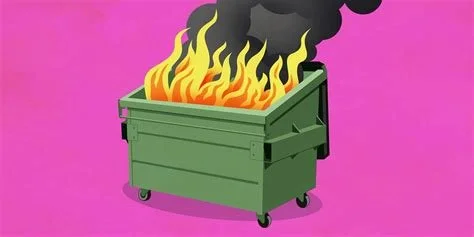
I know, I know. “But there are good things on Twitter too!” Sure. And dumpster diving might help you find some good quality items, but what did you have to wade through to find them? And how do you smell afterwards?

Like any other technological tool, Twitter and other social media platforms can be used for good, but in the hands of fallen man, generally are not. Much of what takes place on Twitter should be considered libel, lying, gossip, bearing false witness, sowing discord among brothers; but because it takes place in a “virtual” space, many act as if none of these considerations apply.

Scripture is not silent or ambivalent when it comes to the power of words, how we use them, or how we are to respond to the words of others. However, as Postman warned, we have “come to adore the technologies that undo (our) capacities to think,” and do not treat them critically enough. So, for those who insist upon dumpster diving, at least create the habit of asking yourself these basic questions while you’re in there:    

1) Is this true?

Exodus 20:16 – “You shall not bear false witness against your neighbor.”

Proverbs 6:19 tell us that the Lord “hates” and regards as “an abomination…a false witness who breathes out lies.”

Proverbs 19:5 – “A false witness will not go unpunished, and he who breathes out lies will not escape.”

Proverbs 24:28 – “Do not deceive with your lips” (or your keyboard, smartphone, or tablet).

Colossians 3:9 – “Do not lie to one another, seeing that you have put off the old self with its practices.”

If you cannot discern the truth of a statement, either ask a wise counselor you know (preferably, an in-the-flesh pastor, elder, or trusted Christian), or ignore it. Above all, do not spread it!

Proverbs 16:28 – “A dishonest man spreads strife, and a whisperer separates close friends.”

Proverbs 17:14 – “The beginning of strife is like letting out water, so quit before the quarrel breaks out.”

Proverbs 26:20 – “For lack of wood the fire goes out, and where there is no whisperer, quarreling ceases.”

2) Is it necessary or helpful?

Proverbs 6:19 tell us that the Lord “hates” and regards as “an abomination…one who sows discord among brothers.”

Proverbs 18:8 – “The words of a whisperer are like delicious morsels; they go down into the inner parts of the body.” They may be “delicious,” but they rot the gut.

Proverbs 24:28 – “Be not a witness against your neighbor without cause.”

3) Is this worth my time, given what God has already given me to do?

Proverbs 20:3 – “It is an honor for a man to keep aloof from strife, but every fool will be quarreling.”

Proverbs 26:17 – “Whoever meddles in a quarrel not his own is like one who takes a passing dog by the ears.”

1st Timothy 6:4-5a – The Apostle Paul warns about those who have “an unhealthy craving for controversy and for quarrels about words, which produce envy, dissension, slander, evil suspicions, and constant friction.” Now, it should be noted that not all who engage in online controversies fall into the category of false teacher being described by Paul in this passage. But it should also be noted that men of God can become preoccupied with them, hence Paul’s warning.

2nd Timothy 2:14-17a – “Remind them of these things, and charge them before God not to quarrel about words, which does no good, but only ruins the hearers. Do your best to present yourself to God as one approved, a worker who has no need to be ashamed, rightly handling the word of truth. But avoid irreverent babble, for it will lead people into more and more ungodliness, and their talk will spread like gangrene.”

2nd Timothy 2:23 – “Have nothing to do with foolish, ignorant controversies; you know that they breed quarrels.”

4) Have I heard both sides?

Proverbs 18:13 - “If one gives an answer before he hears, it is his folly and shame.”

Proverbs 18:17 - “The one who states his case first seems right, until the other comes and examines him.”
5) Do you know (and can you trust) the source?

John 7:51 - “Does our law judge a man without first giving him a hearing and learning what he does?” (emphasis mine)

Titus 3:9-11 – “But avoid foolish controversies, genealogies, dissensions, and quarrels about the law, for they are unprofitable and worthless. As for a person who stirs up division, after warning him once and then twice, have nothing more to do with him, knowing that such a person is warped and sinful; he is self-condemned.” Some sources should simply be avoided altogether.

Advent Readings - Week Four

Advent Readings - Week Four

by Pastor Brian Phillips

The Advent season is a season of preparation – of prayer, contemplation, fasting, and spiritual renewal.  It is a time in which the people of God, by God’s grace, make straight His paths in their hearts.  Rather than simply being an extension of the Christmas celebration, Advent prepares us to more truly and fully celebrate Christ’s birth. 

To help us observe Advent, here is a collection of Scripture readings for each day of the season, drawn from the Book of Common Prayer.  The readings for week four are taken from Psalms, Isaiah, Luke, and John.      

The readings may be done in one sitting, or divided into morning, noon, and evening.  Contemplate each reading in light of the coming Christmas season – as a means of preparation for the birth of Christ.

Sunday, December 22nd – Fourth Sunday of Advent
Psalm 24 - The King of glory comes in
Isaiah 42:1-12 - Christ, the “chosen” one, shall come
John 3:16-21 - God loved the world by sending His Son

Monday, December 23rd
Psalm 61 - Lead me to the rock, which is Christ
Isaiah 11:1-9 - Christ as the righteous branch
John 5:30-47 - The testimony to Christ 

Tuesday, December 24th (Christmas Eve)
Psalm 66 - The awesome deeds of the Lord
Isaiah 11:10-16 - The deeds of the root of Jesse
Luke 1:5-25 - The birth of John the Baptist foretold

Wednesday, December 25th (Christmas Day)
Psalm 72 - A prayer for the true and just King
Isaiah 28:9-22 - The teacher and cornerstone in Zion
Luke 1:26-38 - The birth of Christ foretold

Advent Readings - Week Three

Advent Readings - Week Three

by Pastor Brian Phillips

The Advent season is a season of preparation – of prayer, contemplation, fasting, and spiritual renewal. It is a time in which the people of God, by God’s grace, make straight His paths in their hearts. Rather than simply being an extension of the Christmas celebration, Advent prepares us to more truly and fully celebrate Christ’s birth. 

Here is a collection of Scripture readings for each day of the season, drawn from the Book of Common Prayer. The readings for week three are taken from Psalms, Isaiah, Luke, Mark, and Matthew. The emphasis of the third week of Advent is Joy - the third candle on the Advent wreath (the pink one) marks a shift in the season towards increased joy and anticipation of the celebration of Christ’s birth. The Scripture readings for week three highlight that as well.       

The readings may be done in one sitting, or divided into morning, noon, and evening. Contemplate each reading in light of the coming Christmas season – as a means of preparation for the birth of Christ.

Sunday, December 15th – Third Sunday of Advent
Psalm 103 - A Psalm of gratitude for God’s blessings and mercy
Isaiah 13:6-13 - The day of the Lord is near to judge His enemies, and deliver His people
John 3:22-30 - John the Baptist proclaims that Christ has come as Savior and Judge

Monday, December 16th
Psalm 44 - A prayer for deliverance and help
Isaiah 8:16-9:1 - A reminder to wait for the Lord and trust in His coming deliverance
Luke 22:39-53 - Christ exhorts the disciples to pray; He is betrayed and arrested (darkness before light)

Tuesday, December 17th
Psalm 45 - A psalm of praise: “Your throne, O God, is forever and ever.”
Isaiah 9:1-7 - The promised Christ will take the throne of David
Luke 22:54-69 - Peter denies Christ; He is mocked and beaten, yet proclaims, “from now on the Son of Man shall be seated at the right hand of the power of God.”

Wednesday, December 18th
Psalm 119:49-72 - Trust in God’s word in the face of the “insolent”
Isaiah 9:8-17 - Judgment coming against those who reject the promised Son/Child
Mark 1:1-8 - The ministry of John the Baptist, preparing the way of the Lord

Thursday, December 19th
Psalm 50 - God Himself is Judge
Isaiah 9:18-10:4 - Continuation of the pronouncement of judgment against God’s enemies
Matthew 3:1-12 - John the Baptist calls men to repent and “flee the wrath to come”

Friday, December 20th
Psalm 51 - David’s psalm of repentance after his sins of adultery and murder
Isaiah 10:5-19 - God’s coming judgment against the arrogance of Assyria
Matthew 11:2-15 - Jesus praises the faith and ministry of the imprisoned John the Baptist

Saturday, December 21st
Psalm 55 - The Lord will sustain the righteous, but cast down His enemies
Isaiah 10:20-27 - The remnant will return
Luke 3:1-9 - John the Baptist baptizes and preaches repentance in the wilderness

Advent Readings - Week Two

Advent Readings - Week Two

by Pastor Brian Phillips

The Advent season is a season of preparation – of prayer, contemplation, fasting, and spiritual renewal.  It is a time in which the people of God, by God’s grace, make straight His paths in their hearts.  Rather than simply being an extension of the Christmas celebration, Advent prepares us to more truly and fully celebrate Christ’s birth. 

To help us observe Advent, here is a collection of Scripture readings for each day of the season, drawn from the Book of Common Prayer.  The readings for week two are taken from the prophet Isaiah, and the gospels of St. Luke and St. John. 

The readings may be done in one sitting, or divided into morning and evening.  Contemplate each reading in light of the coming Christmas season – as a means of preparation for the birth of Christ.

I have provided brief overviews, or headlines, of each passage in order to make some of the connections between the passages clearer.

Sunday, December 8th – Second Sunday of Advent
Isaiah 5:1-7 - The vineyard of the Lord (Israel) is destroyed due to their sin and faithlessness
Luke 7:28-35 - The Pharisees reject the message and baptism of John, which Christ commended

Monday, December 9th
Isaiah 5:8-12, 18-23 - A series of “woes” (covenantal curses) pronounced upon Israel’s many sins
Luke 21:20-28 - Jesus tells of the coming destruction of Jerusalem and His judgment upon it

Tuesday, December 10th
Isaiah 5:13-17, 24-25 - Exile and judgment are pronounced upon the wicked
Luke 21:29-38 - Christ warns of judgment and calls His hearers to “watch yourselves”

Wednesday, December 11th
Isaiah 6:1-13 - Isaiah is given a vision of the Lord in His holy temple; Isaiah acknowledges his sin
John 7:53-8:11 - The woman caught in adultery is forgiven by Christ; her accusers leave after being challenged by Jesus

Thursday, December 12th
Isaiah 7:1-9 - Isaiah meets King Ahaz and assures him that the plot against him “shall not come to pass”
Luke 22:1-13 - The plot to kill Jesus, between Judas and the chief priests, is revealed as Jesus prepares for the Passover with His disciples

Friday, December 13th
Isaiah 7:10-25 - “Behold the virgin shall conceive and bear a son, and shall call his name Immanuel.”
Luke 22:14-30 - Christ institutes the communion meal with His disciples

Saturday, December 14th
Isaiah 8:1-15 - Assyrian captivity prophesied; Israel called to honor and fear the Lord, even in captivity
Luke 22:31-38 - Peter’s denial foretold


Advent Readings - Week One

Advent Readings - Week One

Advent is a season of preparation – of prayer, contemplation, fasting, and spiritual renewal. It is a time in which the people of God, by God’s grace, make straight His paths in their hearts. Rather than simply being an extension of the Christmas celebration, Advent prepares us to more truly and fully celebrate Christ’s birth. 

To help us observe Advent, here is a collection of Scripture readings for each day of the season, drawn from the Book of Common Prayer. The readings for week one are taken from Isaiah, Matthew, and Luke. 

The readings from Isaiah are a strong call for repentance, while the gospel readings combine warnings against being unprepared for the Lord’s coming and events from late in the life of Christ. Those events highlight why Christ came and died, fitting topics for contemplation as Advent begins.

Sunday, December 1st – First Sunday of Advent
Isaiah 1:1-9
Matthew 25:1-13

Monday, December 2nd
Isaiah 1:10-20
Luke 20:1-8  

Tuesday, December 3rd
Isaiah 1:21-31
Luke 20:9-18

Wednesday, December 4th
Isaiah 2:1-11
Luke 20:19-26

Thursday, December 5th
Isaiah 2:12-22
Luke 20:27-40

Friday, December 6th
Isaiah 3:8-15
Luke 20:41-21:4

Saturday, December 7th
Isaiah 4:2-6
Luke 21:5-19

On Morning Moods & the Sorrow of a Romantic

On Morning Moods & the Sorrow of a Romantic

Originally published by The CiRCE Institute on March 28, 2014. Reprinted with permission.

by Brian Phillips

Bright red numbers glow, burning my sleep-heavy eyes.  It takes a few moments for my brain to process what I’m seeing, but there’s little doubt now – “5:30.”  Surely such horrific buzzing should be reserved for air raid alarms.  I only use the torturous device when I have to awaken early, and then only for its persuasiveness.  It is 5:30 a.m. on a Monday morning, and I do not want to get out of bed. 

As a pastor, I generally find Sundays to be a strange blend of exhaustion and sleeplessness, which compounds my Monday morning problem.  But, here I am, awake before the dawn, because I have a class to teach.  A dozen ninth graders will gather to talk about King Arthur with me in a couple of hours and I have a traffic-filled journey to get to them.    

Perhaps my problem resides in a truth of which I am gradually becoming aware: I am not a morning person.  I love the idea of being a morning person, but the reality generally escapes me.  Watching sunrises, drinking coffee on the porch, hearing the first tunes of songbirds somehow echoing over Edvard Grieg’s Morning Mood (Peer Gynt Suite No. 1, Op. 46) – it all sounds great, until the blaring siren begins.

My son also likes to wake me up in the middle of the night, usually to accompany him to the bathroom.  He doesn’t really “need” me, but I get up anyway.  He always grins to see me stumbling behind him.  I wait for him, tousle his hair as he walks out of the bathroom, and then I tuck him into bed all over again, kiss him, whisper “I love you, Ian” and wait for his reply.  One day, I know I will miss our routine, 3:00 a.m. or not.

The seemingly constant state of tiredness in which I live arises from callings that are bigger than me - whether related to teaching early classes, my pastoral duties, or my “on call” status as Dad.  These are vocations which, even when thought of individually, can overwhelm.  Who is sufficient for these things, or even, this one thing?  Sure, waking up early and battling tiredness for a season is a minuscule price for eternal work, but that is an incomplete assessment.  “Tired” is only one difficulty among many we face in our labors.    

Perhaps the problem resides less in my “morning mood” and more in the assumption that life should be easier, that even the richest of work should be less troublesome, that somehow life should just be simpler?  Many of us recognize the insanity of modern life, and strive for greater simplicity, paring down our schedules, eliminating unnecessary stresses, buying whatever books promise to help.  Recently, I read (and immediately began rereading) George Herbert’s 1632 work The Country Parson, in which he describes his life and needed character as a priest in rural England.  Here is one short chapter, entitled “The Parson in Mirth”:

“The Country Parson is generally sad, because he knows nothing but the cross of Christ; his mind being defixed on it with those nails wherewith his Master was.  Or, if he have any leisure to look off from thence, he meets continually with two most sad spectacles, - sin and misery; God dishonored every day, and man afflicted.  Nevertheless, he sometimes refresheth himself, as knowing that nature will not bear everlasting droopings, and that pleasantness of disposition is a great key to do good: not only because all men shun the company of perpetual severity; but also for that, when they are in company, instructions seasoned with pleasantness both enter sooner, and root deeper.  Wherefore he condescends to human frailties, both in himself and others; and intermingles some mirth in his discourses occasionally, according to the pulse of the hearer.”

Modern life, with its blinding pace, technological addictions, incessant noise, and blaring alarm clocks, creates much needless anxiety, but apparently Herbert found 17th-century life in a remote English parish to be troubling as well.  Despite the differences in the nature and specifics of the work, all of us - every parent, homeschooler, teacher, pastor, and so on - labors in sorrow.  We labor with the sorrow of romantics, knowing that things are not as they ought to be – that we are insufficient for the labors given to our hands, that our speech is lisping and our hearers dull, that we have too little of the wisdom we dearly hope to impart, and far more.

My petty tale of rising too early for my own comfort stands as one small weed in a field full.  But, as I rise another day and stand before the weeds, hands and head still aching from the previous day’s labor, I do so with more than my romantic sorrow.  I set to work with the picture of what could be, with mind fixed not only upon the sin and misery I will encounter in both myself and others, but upon the cross of my Master, and with the calling of Him whose wisdom is inscrutable.  I believe my morning mood could improve.   

Fall Back!

Fall Back!

It's time to fall back!  Don't forget to move your clocks back one hour on Sunday, November 3rd!

Of course, unless you plan to set an alarm for the wee hours of the morn, you should probably just do it on Saturday.  

If you live in Arizona, you may ignore this.

On Modern Education & the Burning of Books

On Modern Education & the Burning of Books

By Pastor Brian Phillips

In the early to mid-twentieth century, several authors produced works that have been labeled as “social prophecy,” science fiction, and “dystopian” novels. Each of them delivered sober warnings about the direction of culture with particular emphasis directed toward politics, education, medicine, technology, and human relationships. 

The most influential authors of this genre were Aldous Huxley, George Orwell, and Ray Bradbury. Huxley’s Brave New World appeared in 1932Orwell’s 1984 were released in 1961, and Bradbury’s Fahrenheit 451 appeared in its full form in 1953 (being previously published as a short story entitled “The Fireman” in 1950). Each of these works has proven to be eerily accurate in its own right.

American culture has been introduced to a system of “newspeak” (1984), seen in the unwritten list of things people are no longer allowed to say under the guise of protecting basic rights. The same types of censorship occur in a slightly different, yet equally systematic way in Fahrenheit 451, as “firemen” burn books and arrest their owners to prevent people from thinking well or feeling powerful emotion. Huxley’s Brave New World – overall, perhaps the most accurately prophetic – is created not by the active removal of books and thought, but through the creation of a people who do not want to read in the first place. Books are no threat to the state if no one reads them. So, the people are lulled into a stupor through a never waning dependence upon prescription drugs and technological entertainment.

Regarding human interaction and education, Fahrenheit 451 speaks volumes and provides much fodder for thought about the current state of things. Early in the text, the fireman, Guy Montag, and his seemingly unusual young neighbor, Clarisse, have a lengthy conversation in which she makes the following observations about what it means to be social under the constraints of modern education.


 “Why aren’t you in school? I see you every day wandering around.” “Oh, they don’t miss me,” she said. “I’m antisocial, they say. I don’t mix. It’s so strange. I’m very social indeed. It all depends on what you mean by social, doesn’t it? Social to me means talking to you about things like this…Or talking about how strange the world is. Being with people is nice. But I don’t think it’s social to get a bunch of people together and then not let them talk, do you?”


Clarisse goes on to describe the mind-numbing curriculum at school: “…do you know, we never ask questions, or at least most don’t; they just run the answers at you…It’s a lot of funnels and a lot of water poured down the spout and out the bottom, and them telling us its wine when it’s not.” That’s life at school.

What about life outside of school? What happens to students who are “educated” in that type of environment? Clarisse has some comments about this as well. She goes on to tell Montag:


“They run us so ragged by the end of the day we can’t do anything but go to bed or head for a Fun Park to bully people around, break windowpanes in the Window Smasher place or wreck cars in the Car Wrecker place with the big steel ball. Or go out in the cars and race on the streets…I guess I’m everything they say I am, all right. I haven’t any friends. That’s supposed to prove I’m abnormal. But everyone I know is either shouting or dancing around like wild or beating up one another. Do you notice how people hurt each other nowadays?”


Obviously, Clarisse’s commentary on her own educational experience is tragic, yet it causes the modern reader to cringe because it so closely resembles the current state of education in America. 

What could cause such a state? Too often, people note symptoms of the sickness in modern education – behavioral issues, lowered standards, the vanishing ability to think well, shrinking test scores, etc. – and ignore the disease itself. The symptoms are easily diagnosed; the disease is not. 

The disease or cause, to leave the medical metaphor, is rooted in the soul or lack thereof in modern education. Bradbury’s picture of education is inevitable, if children are viewed and treated as soulless beings (worse yet, soulless animals). The goal of education is the transformation of the soul into maturity and the modern system, due to a plethora of political and societal pressures, must proceed on one of two assumptions: either that students have no soul to nurture or, if students do have souls, it is not the job of the school to nurture it. 

Both assumptions produce the same result – starvation of the soul. Such is the state of modern education, thanks to the contributions of men like Darwin, Dewey, and Marx. No “firemen” were required.                  

Readings for Reformation Day & All Saints' Day

Readings for Reformation Day & All Saints' Day

by Pastor Brian Phillips

October 31st, known as All Hallows Eve or Halloween, is the eve of All Saints’ Day. The name “Halloween” derives its name is from the full title of All Hallows Eve. October 31st is also referred to as Reformation Day, in commemoration of Martin Luther nailing the 95 Theses to the door of Castle Church in Wittenberg, the event often held to be the beginning of the Protestant Reformation. This event is a helpful historical marker, but the Reformation began much earlier, with men like John Wycliffe and Jan Huss, and others. 

The Reformation was intended to be just that, a reformation; not a revolution. Luther and the other reformers had no intention of leaving the Catholic Church, but eventually did so, some departing on their own, others driven out. But, when we commemorate the Reformation, we do not desire to commemorate the division of the Church but rather the message of grace, of salvation by grace through faith, and the return of the Bible to the hands of the ministry and laity of the Church.

As we observe Reformation Day and All Saints’ Day, here are some suggested reads for the occasion and beyond: 

1)    Trial & Triumph by Richard Hannula

A collection of 46 short biographies of Christians from all periods of Church history, Hannula’s work is suitable for adults and children alike. It includes the stories of Polycarp, Anselm, Augustine, Charlemagne, Martin Luther, C.S. Lewis, and many more. Trial & Triumph is like a trip through the family album!

2)   The Reformation 500 Years Later: 12 Things You Need to Know by Benjamin Wiker

Written by a Roman Catholic thinker, it may seem odd to include it on this list. However, Dr. Wiker provides a balanced assessment of the Reformation, the good, bad, and the ugly. Wiker is honest about the flaws of the Roman Catholic Church before the Reformation, and the flaws of the Reformers and their descendants. Worth the read, even if you leave with some disagreements.

3)    The End of Protestantism by Peter Leithart

An honest assessment of some of the Reformation’s unintended consequences, written by a Reformed pastor and theologian. Dr. Leithart wrestles with the rampant division that rose from the Reformation, and the chaotic denominationalism that dominates the American church. He makes a case for growing unity between all the streams of Christianity. This is an ambitious work that leaves us struggling with all the right questions.

4)    Heralds of the Reformation by Richard Hannula

Richard Hannula, tells the stories of thirty figures of the Reformation throughout Europe. Beginning with the forerunners of the Reformation, like Wycliffe and Huss, and proceeding geographically, Hannula includes household names like Luther, Calvin, and Knox, along with relatively unknown players.

5) Radiant: Fifty Remarkable Women in Church History by Richard Hannula

Yes, yet another work by Richard Hannula! The book’s own “official” description says it all:
”From South America to Europe, from China to Africa to the Wild West, in prisons and in throne rooms, many great Christian have left a stunning legacy for their successors. These short and moving biographies for young people introduce fifty often unfamiliar champions of the faith: women like Ida Kahn, who opened the first hospital in a Chinese city of 300,000 people; Lady Anne Hamilton, who rode with the Covenanter cavalry at the decisive Battle of Berwick; and Anngrace Taban, who was forced to type secret battle plans for the Sudan People's Liberation Army. In an culture where women's role in society is often at question, these examples of faithfulness can remind us that courage and godliness are possible anywhere, even if you are surrounded by Muslim raiders, Japanese guards, Nazis, or cannibals.”

This list could be much, much longer, but these are an excellent start to honoring our brothers and sisters from ages past. So, as we prepare to observe Reformation Day and All Saints’ Day, let us rejoice in God’s grace, as it has been shown to each of us, and to those gone before.

The Rivendell Fellowship

The Rivendell Fellowship

In J.R.R. Tolkien’s The Fellowship of the Ring, the early days of Frodo’s journey leave him exhausted beyond belief, and in need of food, drink, rest, and counsel. He was unsure of where to go, who to trust, and what to do. After being wounded by a Black Rider's dagger, Frodo is taken to Rivendell, to the house of Elrond.

When he awakens in Rivendell, Frodo discovers that he has been healed by Elrond. He has been given rest, is fed by the elves, feasts with his friends, and given wisdom from Gandalf amid smokes rings from his pipe.

We long to do the same for the men of our church – strengthening, encouraging, supporting, and teaching. So, join us on Thursday, October 24th, at the "Rivendell Fellowship."

  • Where: Pastor Brian’s house (contact him for location info.)

  • When: Thursday, October 24th from 7pm-9pm

  • Menu: Hot dogs, bratwursts, chips, corn, and more! Bring any other sides or desserts, if you wish.

  • Other Details: The Bible study (on The Apostles’ Creed) and prayer will be inside, but pipes and cigars will be enjoyed outdoors afterwards (Note: cigars are always available, even if you don’t bring your own).

When You Pray... (Part Two)

When You Pray... (Part Two)

By Pastor Brian Phillips

“O Lord, grant me to greet the coming day in peace. Help me in all things to rely upon Your holy will. In every hour of the day reveal Your will to me. Bless my dealings with all who surround me. Teach me to treat all that comes to me throughout the day with peace of soul, and with the firm conviction that Your will governs all. In all my deeds and words guide my thoughts and feelings. In unforeseen events let me not forget that all are sent by You. Teach me to act firmly and wisely, without embittering or embarrassing others. Give me strength to bear the fatigue of this coming day with all that it will bring. Direct my will, teach me to pray, pray You Yourself in me. Amen.”


Notice the line – “teach me to pray, and pray You Yourself in me.  Amen.” The prayer, which is a morning prayer from St. Philaret of Moscow, ends with the desire for more prayer, and the request that the Lord would continue teaching us in the art of prayer, that the Lord would pray in us when we do not know what to say or what to ask for.

The disciples, in Luke’s Gospel, echo this desire, saying, Lord, teach us to pray, as John taught his disciples.” And, in answer to that request, Jesus said, “Pray then like this: ‘Our Father in heaven, hallowed be your name. Your kingdom come, your will be done, on earth as it is in heaven. Give us this day our daily bread, and forgive us our debts, as we also have forgiven our debtors. And lead us not into temptation, but deliver us from evil.’”

We sing this prayer every Lord’s Day in the liturgy, not because the elders thought it’d be a “nice touch” but because, in it, we have the whole of prayer. In this short prayer, Jesus models for us worship, submission, trust, petition, and confession.   

Jesus begins, “Pray then like this: ‘Our Father in heaven…” These opening words, so familiar that we can easily pass them by without much thought, were the subject of great consideration by the Church fathers. Tertullian wrote, “By saying ‘our Father who art in heaven’ we are both adoring God and expressing our faith.” He also noted that “To address God as Father is the privilege of belief in the Son.” That is, prayer of the type Jesus is describing is the special privilege of Christians – not all “prayer” is created equal. 

John calls us back to this incredible idea in 1st John 3:1 – “See what kind of love the Father has given to us, that we should be called children of God!” We have received “adoption as sons…And because (we) are sons, God has sent the Spirit of his Son into our hearts, crying, ‘Abba! Father!’” We approach the Lord with reverence, certainly, but also with the joy of a child calling out to his loving Father. There is closeness here, intimacy, affection.

St. Augustine, in commenting on this part of the prayer, said, “Do not think of heaven in simplistic spatial metaphors, as if the birds are nearer to God than we. It is not written that ‘the Lord is closer to tall people.’” Now, Augustine was ministering to those who once held the old Greco-Roman beliefs that the birds were the messengers of the gods because they were nearer to the gods. So, he is trying to rid them of that idea; but it applies to us as well. When we pray, “Our Father who art in heaven,” we must not have the idea that there is a vast expanse between us and the Lord.  As the Children’s Catechism teaches: “Where is God? He is everywhere.”

So, we have the honor of praying, “Our Father who art in heaven,” and we continue – “hallowed be your name” or “holy be your name.” Another Church father, Cyprian, made an excellent observation here, saying, “God who is incomparably holy is not made holy by our prayer; rather, we pray that his holy name may daily be made holy in us.” Another way of saying this is “may Your name be kept holy.” We are praying that we, and those around us, would treat the Lord with reverence. 

Now, notice how these two complement one another – we call upon Him as His children, yet we do so while keeping His name holy. There is love and reverence, affection and fear. 

Jesus continues, telling us to pray, “Thy kingdom come, thy will be done, on earth as it is in heaven.” This prayer of submission to the Father foreshadowed and now echoes the prayer of Jesus in the garden of Gethsemane when, even looking ahead to the cross, Jesus submitted Himself to the will of the Father. In heaven, God’s will is done perfectly, continually; just as we pray it will be done here.

We pray, “Give us this day our daily bread” a request loaded with meaning. We are, of course, praying for God’s daily provision for our physical needs; that He would provide us with food. But, in that, we are offering a prayer against worry and anxiety. In fact, the phrase could very easily be translated as “give us our bread for tomorrow.” In other words, it is not our job to worry with the things of tomorrow – our days are in the Lord’s hands (read 6:31-34).

But, there is more to this request than simply asking for bread. Notice that Jesus connects this request for daily bread with “and forgive us our debts, as we also have forgiven our debtors.” Now, we will come back to this idea next week when we look at verses 14-15, where Jesus obviously returns to the subject of forgiveness and prayer, but for now let’s note one thing. When Jesus tells us to pray for our “daily bread” and then connects it with forgiveness, He is speaking beyond mere physical bread or the meeting of physical needs. It seems to me that He is teaching us to pray for grace, mercy, and forgiveness ourselves – we are praying for the Bread of Life, not just physical bread. In John 6:51 Jesus said, “I am the living bread that came down from heaven. If anyone eats of this bread, he will live forever. And the bread that I will give for the life of the world is my flesh.” 

Finally, Jesus tells us to pray, “And lead us not into temptation, but deliver us from evil” (or from the evil one). Having prayed that our debts or trespasses would be forgiven, we now pray for God’s help in resisting them in the future. Martin Luther noted – “The devil who besets us is not lazy or careless, and our flesh is too ready and eager to sin and is disinclined to the spirit of prayer.” So, we pray for God’s help to resist temptation, to resist the evil one, and that the Lord would lead us away from temptation to begin with, an acknowledgement of our weakness and our need for God’s strength and grace.