Advent Readings - Week Three

Advent Readings - Week Three

by Pastor Brian Phillips

The Advent season is a season of preparation – of prayer, contemplation, fasting, and spiritual renewal. It is a time in which the people of God, by God’s grace, make straight His paths in their hearts. Rather than simply being an extension of the Christmas celebration, Advent prepares us to more truly and fully celebrate Christ’s birth. 

Here is a collection of Scripture readings for each day of the season, drawn from the Book of Common Prayer. The readings for week three are taken from Psalms, Isaiah, Luke, Mark, and Matthew. The emphasis of the third week of Advent is Joy - the third candle on the Advent wreath (the pink one) marks a shift in the season towards increased joy and anticipation of the celebration of Christ’s birth. The Scripture readings for week three highlight that as well.       

The readings may be done in one sitting, or divided into morning, noon, and evening. Contemplate each reading in light of the coming Christmas season – as a means of preparation for the birth of Christ.

Sunday, December 15th – Third Sunday of Advent
Psalm 103 - A Psalm of gratitude for God’s blessings and mercy
Isaiah 13:6-13 - The day of the Lord is near to judge His enemies, and deliver His people
John 3:22-30 - John the Baptist proclaims that Christ has come as Savior and Judge

Monday, December 16th
Psalm 44 - A prayer for deliverance and help
Isaiah 8:16-9:1 - A reminder to wait for the Lord and trust in His coming deliverance
Luke 22:39-53 - Christ exhorts the disciples to pray; He is betrayed and arrested (darkness before light)

Tuesday, December 17th
Psalm 45 - A psalm of praise: “Your throne, O God, is forever and ever.”
Isaiah 9:1-7 - The promised Christ will take the throne of David
Luke 22:54-69 - Peter denies Christ; He is mocked and beaten, yet proclaims, “from now on the Son of Man shall be seated at the right hand of the power of God.”

Wednesday, December 18th
Psalm 119:49-72 - Trust in God’s word in the face of the “insolent”
Isaiah 9:8-17 - Judgment coming against those who reject the promised Son/Child
Mark 1:1-8 - The ministry of John the Baptist, preparing the way of the Lord

Thursday, December 19th
Psalm 50 - God Himself is Judge
Isaiah 9:18-10:4 - Continuation of the pronouncement of judgment against God’s enemies
Matthew 3:1-12 - John the Baptist calls men to repent and “flee the wrath to come”

Friday, December 20th
Psalm 51 - David’s psalm of repentance after his sins of adultery and murder
Isaiah 10:5-19 - God’s coming judgment against the arrogance of Assyria
Matthew 11:2-15 - Jesus praises the faith and ministry of the imprisoned John the Baptist

Saturday, December 21st
Psalm 55 - The Lord will sustain the righteous, but cast down His enemies
Isaiah 10:20-27 - The remnant will return
Luke 3:1-9 - John the Baptist baptizes and preaches repentance in the wilderness

Advent Readings - Week Two

Advent Readings - Week Two

by Pastor Brian Phillips

The Advent season is a season of preparation – of prayer, contemplation, fasting, and spiritual renewal.  It is a time in which the people of God, by God’s grace, make straight His paths in their hearts.  Rather than simply being an extension of the Christmas celebration, Advent prepares us to more truly and fully celebrate Christ’s birth. 

To help us observe Advent, here is a collection of Scripture readings for each day of the season, drawn from the Book of Common Prayer.  The readings for week two are taken from the prophet Isaiah, and the gospels of St. Luke and St. John. 

The readings may be done in one sitting, or divided into morning and evening.  Contemplate each reading in light of the coming Christmas season – as a means of preparation for the birth of Christ.

I have provided brief overviews, or headlines, of each passage in order to make some of the connections between the passages clearer.

Sunday, December 8th – Second Sunday of Advent
Isaiah 5:1-7 - The vineyard of the Lord (Israel) is destroyed due to their sin and faithlessness
Luke 7:28-35 - The Pharisees reject the message and baptism of John, which Christ commended

Monday, December 9th
Isaiah 5:8-12, 18-23 - A series of “woes” (covenantal curses) pronounced upon Israel’s many sins
Luke 21:20-28 - Jesus tells of the coming destruction of Jerusalem and His judgment upon it

Tuesday, December 10th
Isaiah 5:13-17, 24-25 - Exile and judgment are pronounced upon the wicked
Luke 21:29-38 - Christ warns of judgment and calls His hearers to “watch yourselves”

Wednesday, December 11th
Isaiah 6:1-13 - Isaiah is given a vision of the Lord in His holy temple; Isaiah acknowledges his sin
John 7:53-8:11 - The woman caught in adultery is forgiven by Christ; her accusers leave after being challenged by Jesus

Thursday, December 12th
Isaiah 7:1-9 - Isaiah meets King Ahaz and assures him that the plot against him “shall not come to pass”
Luke 22:1-13 - The plot to kill Jesus, between Judas and the chief priests, is revealed as Jesus prepares for the Passover with His disciples

Friday, December 13th
Isaiah 7:10-25 - “Behold the virgin shall conceive and bear a son, and shall call his name Immanuel.”
Luke 22:14-30 - Christ institutes the communion meal with His disciples

Saturday, December 14th
Isaiah 8:1-15 - Assyrian captivity prophesied; Israel called to honor and fear the Lord, even in captivity
Luke 22:31-38 - Peter’s denial foretold


Advent Readings - Week One

Advent Readings - Week One

Advent is a season of preparation – of prayer, contemplation, fasting, and spiritual renewal. It is a time in which the people of God, by God’s grace, make straight His paths in their hearts. Rather than simply being an extension of the Christmas celebration, Advent prepares us to more truly and fully celebrate Christ’s birth. 

To help us observe Advent, here is a collection of Scripture readings for each day of the season, drawn from the Book of Common Prayer. The readings for week one are taken from Isaiah, Matthew, and Luke. 

The readings from Isaiah are a strong call for repentance, while the gospel readings combine warnings against being unprepared for the Lord’s coming and events from late in the life of Christ. Those events highlight why Christ came and died, fitting topics for contemplation as Advent begins.

Sunday, December 1st – First Sunday of Advent
Isaiah 1:1-9
Matthew 25:1-13

Monday, December 2nd
Isaiah 1:10-20
Luke 20:1-8  

Tuesday, December 3rd
Isaiah 1:21-31
Luke 20:9-18

Wednesday, December 4th
Isaiah 2:1-11
Luke 20:19-26

Thursday, December 5th
Isaiah 2:12-22
Luke 20:27-40

Friday, December 6th
Isaiah 3:8-15
Luke 20:41-21:4

Saturday, December 7th
Isaiah 4:2-6
Luke 21:5-19

On Morning Moods & the Sorrow of a Romantic

On Morning Moods & the Sorrow of a Romantic

Originally published by The CiRCE Institute on March 28, 2014. Reprinted with permission.

by Brian Phillips

Bright red numbers glow, burning my sleep-heavy eyes.  It takes a few moments for my brain to process what I’m seeing, but there’s little doubt now – “5:30.”  Surely such horrific buzzing should be reserved for air raid alarms.  I only use the torturous device when I have to awaken early, and then only for its persuasiveness.  It is 5:30 a.m. on a Monday morning, and I do not want to get out of bed. 

As a pastor, I generally find Sundays to be a strange blend of exhaustion and sleeplessness, which compounds my Monday morning problem.  But, here I am, awake before the dawn, because I have a class to teach.  A dozen ninth graders will gather to talk about King Arthur with me in a couple of hours and I have a traffic-filled journey to get to them.    

Perhaps my problem resides in a truth of which I am gradually becoming aware: I am not a morning person.  I love the idea of being a morning person, but the reality generally escapes me.  Watching sunrises, drinking coffee on the porch, hearing the first tunes of songbirds somehow echoing over Edvard Grieg’s Morning Mood (Peer Gynt Suite No. 1, Op. 46) – it all sounds great, until the blaring siren begins.

My son also likes to wake me up in the middle of the night, usually to accompany him to the bathroom.  He doesn’t really “need” me, but I get up anyway.  He always grins to see me stumbling behind him.  I wait for him, tousle his hair as he walks out of the bathroom, and then I tuck him into bed all over again, kiss him, whisper “I love you, Ian” and wait for his reply.  One day, I know I will miss our routine, 3:00 a.m. or not.

The seemingly constant state of tiredness in which I live arises from callings that are bigger than me - whether related to teaching early classes, my pastoral duties, or my “on call” status as Dad.  These are vocations which, even when thought of individually, can overwhelm.  Who is sufficient for these things, or even, this one thing?  Sure, waking up early and battling tiredness for a season is a minuscule price for eternal work, but that is an incomplete assessment.  “Tired” is only one difficulty among many we face in our labors.    

Perhaps the problem resides less in my “morning mood” and more in the assumption that life should be easier, that even the richest of work should be less troublesome, that somehow life should just be simpler?  Many of us recognize the insanity of modern life, and strive for greater simplicity, paring down our schedules, eliminating unnecessary stresses, buying whatever books promise to help.  Recently, I read (and immediately began rereading) George Herbert’s 1632 work The Country Parson, in which he describes his life and needed character as a priest in rural England.  Here is one short chapter, entitled “The Parson in Mirth”:

“The Country Parson is generally sad, because he knows nothing but the cross of Christ; his mind being defixed on it with those nails wherewith his Master was.  Or, if he have any leisure to look off from thence, he meets continually with two most sad spectacles, - sin and misery; God dishonored every day, and man afflicted.  Nevertheless, he sometimes refresheth himself, as knowing that nature will not bear everlasting droopings, and that pleasantness of disposition is a great key to do good: not only because all men shun the company of perpetual severity; but also for that, when they are in company, instructions seasoned with pleasantness both enter sooner, and root deeper.  Wherefore he condescends to human frailties, both in himself and others; and intermingles some mirth in his discourses occasionally, according to the pulse of the hearer.”

Modern life, with its blinding pace, technological addictions, incessant noise, and blaring alarm clocks, creates much needless anxiety, but apparently Herbert found 17th-century life in a remote English parish to be troubling as well.  Despite the differences in the nature and specifics of the work, all of us - every parent, homeschooler, teacher, pastor, and so on - labors in sorrow.  We labor with the sorrow of romantics, knowing that things are not as they ought to be – that we are insufficient for the labors given to our hands, that our speech is lisping and our hearers dull, that we have too little of the wisdom we dearly hope to impart, and far more.

My petty tale of rising too early for my own comfort stands as one small weed in a field full.  But, as I rise another day and stand before the weeds, hands and head still aching from the previous day’s labor, I do so with more than my romantic sorrow.  I set to work with the picture of what could be, with mind fixed not only upon the sin and misery I will encounter in both myself and others, but upon the cross of my Master, and with the calling of Him whose wisdom is inscrutable.  I believe my morning mood could improve.   

Fall Back!

Fall Back!

It's time to fall back!  Don't forget to move your clocks back one hour on Sunday, November 3rd!

Of course, unless you plan to set an alarm for the wee hours of the morn, you should probably just do it on Saturday.  

If you live in Arizona, you may ignore this.

On Modern Education & the Burning of Books

On Modern Education & the Burning of Books

By Pastor Brian Phillips

In the early to mid-twentieth century, several authors produced works that have been labeled as “social prophecy,” science fiction, and “dystopian” novels. Each of them delivered sober warnings about the direction of culture with particular emphasis directed toward politics, education, medicine, technology, and human relationships. 

The most influential authors of this genre were Aldous Huxley, George Orwell, and Ray Bradbury. Huxley’s Brave New World appeared in 1932Orwell’s 1984 were released in 1961, and Bradbury’s Fahrenheit 451 appeared in its full form in 1953 (being previously published as a short story entitled “The Fireman” in 1950). Each of these works has proven to be eerily accurate in its own right.

American culture has been introduced to a system of “newspeak” (1984), seen in the unwritten list of things people are no longer allowed to say under the guise of protecting basic rights. The same types of censorship occur in a slightly different, yet equally systematic way in Fahrenheit 451, as “firemen” burn books and arrest their owners to prevent people from thinking well or feeling powerful emotion. Huxley’s Brave New World – overall, perhaps the most accurately prophetic – is created not by the active removal of books and thought, but through the creation of a people who do not want to read in the first place. Books are no threat to the state if no one reads them. So, the people are lulled into a stupor through a never waning dependence upon prescription drugs and technological entertainment.

Regarding human interaction and education, Fahrenheit 451 speaks volumes and provides much fodder for thought about the current state of things. Early in the text, the fireman, Guy Montag, and his seemingly unusual young neighbor, Clarisse, have a lengthy conversation in which she makes the following observations about what it means to be social under the constraints of modern education.


 “Why aren’t you in school? I see you every day wandering around.” “Oh, they don’t miss me,” she said. “I’m antisocial, they say. I don’t mix. It’s so strange. I’m very social indeed. It all depends on what you mean by social, doesn’t it? Social to me means talking to you about things like this…Or talking about how strange the world is. Being with people is nice. But I don’t think it’s social to get a bunch of people together and then not let them talk, do you?”


Clarisse goes on to describe the mind-numbing curriculum at school: “…do you know, we never ask questions, or at least most don’t; they just run the answers at you…It’s a lot of funnels and a lot of water poured down the spout and out the bottom, and them telling us its wine when it’s not.” That’s life at school.

What about life outside of school? What happens to students who are “educated” in that type of environment? Clarisse has some comments about this as well. She goes on to tell Montag:


“They run us so ragged by the end of the day we can’t do anything but go to bed or head for a Fun Park to bully people around, break windowpanes in the Window Smasher place or wreck cars in the Car Wrecker place with the big steel ball. Or go out in the cars and race on the streets…I guess I’m everything they say I am, all right. I haven’t any friends. That’s supposed to prove I’m abnormal. But everyone I know is either shouting or dancing around like wild or beating up one another. Do you notice how people hurt each other nowadays?”


Obviously, Clarisse’s commentary on her own educational experience is tragic, yet it causes the modern reader to cringe because it so closely resembles the current state of education in America. 

What could cause such a state? Too often, people note symptoms of the sickness in modern education – behavioral issues, lowered standards, the vanishing ability to think well, shrinking test scores, etc. – and ignore the disease itself. The symptoms are easily diagnosed; the disease is not. 

The disease or cause, to leave the medical metaphor, is rooted in the soul or lack thereof in modern education. Bradbury’s picture of education is inevitable, if children are viewed and treated as soulless beings (worse yet, soulless animals). The goal of education is the transformation of the soul into maturity and the modern system, due to a plethora of political and societal pressures, must proceed on one of two assumptions: either that students have no soul to nurture or, if students do have souls, it is not the job of the school to nurture it. 

Both assumptions produce the same result – starvation of the soul. Such is the state of modern education, thanks to the contributions of men like Darwin, Dewey, and Marx. No “firemen” were required.                  

Readings for Reformation Day & All Saints' Day

Readings for Reformation Day & All Saints' Day

by Pastor Brian Phillips

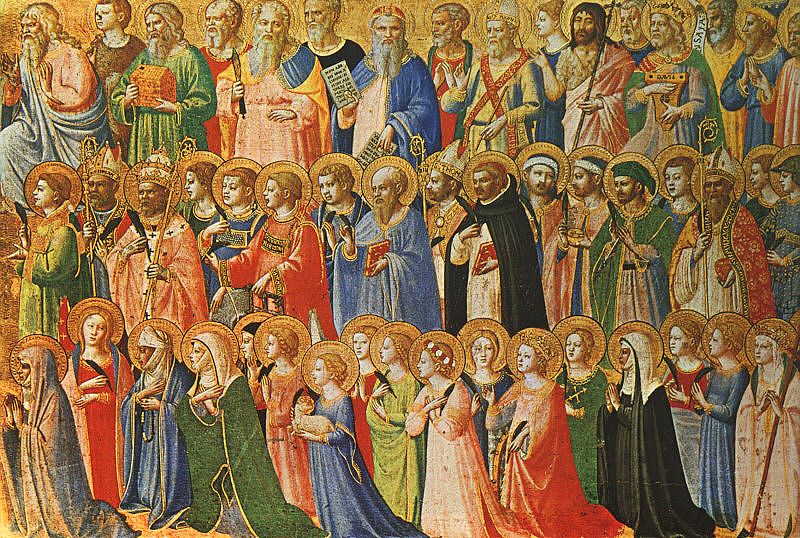
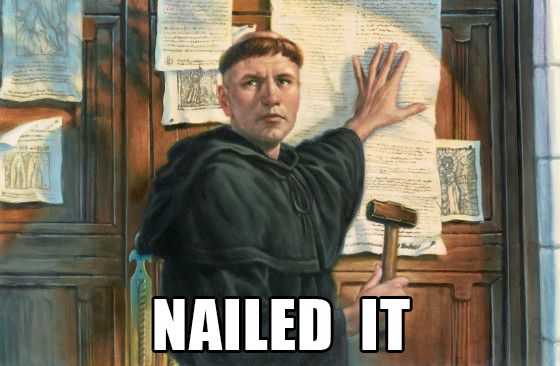
October 31st, known as All Hallows Eve or Halloween, is the eve of All Saints’ Day. The name “Halloween” derives its name is from the full title of All Hallows Eve. October 31st is also referred to as Reformation Day, in commemoration of Martin Luther nailing the 95 Theses to the door of Castle Church in Wittenberg, the event often held to be the beginning of the Protestant Reformation. This event is a helpful historical marker, but the Reformation began much earlier, with men like John Wycliffe and Jan Huss, and others. 

The Reformation was intended to be just that, a reformation; not a revolution. Luther and the other reformers had no intention of leaving the Catholic Church, but eventually did so, some departing on their own, others driven out. But, when we commemorate the Reformation, we do not desire to commemorate the division of the Church but rather the message of grace, of salvation by grace through faith, and the return of the Bible to the hands of the ministry and laity of the Church.

As we observe Reformation Day and All Saints’ Day, here are some suggested reads for the occasion and beyond: 

1)    Trial & Triumph by Richard Hannula

A collection of 46 short biographies of Christians from all periods of Church history, Hannula’s work is suitable for adults and children alike. It includes the stories of Polycarp, Anselm, Augustine, Charlemagne, Martin Luther, C.S. Lewis, and many more. Trial & Triumph is like a trip through the family album!

2)   The Reformation 500 Years Later: 12 Things You Need to Know by Benjamin Wiker

Written by a Roman Catholic thinker, it may seem odd to include it on this list. However, Dr. Wiker provides a balanced assessment of the Reformation, the good, bad, and the ugly. Wiker is honest about the flaws of the Roman Catholic Church before the Reformation, and the flaws of the Reformers and their descendants. Worth the read, even if you leave with some disagreements.

3)    The End of Protestantism by Peter Leithart

An honest assessment of some of the Reformation’s unintended consequences, written by a Reformed pastor and theologian. Dr. Leithart wrestles with the rampant division that rose from the Reformation, and the chaotic denominationalism that dominates the American church. He makes a case for growing unity between all the streams of Christianity. This is an ambitious work that leaves us struggling with all the right questions.

4)    Heralds of the Reformation by Richard Hannula

Richard Hannula, tells the stories of thirty figures of the Reformation throughout Europe. Beginning with the forerunners of the Reformation, like Wycliffe and Huss, and proceeding geographically, Hannula includes household names like Luther, Calvin, and Knox, along with relatively unknown players.

5) Radiant: Fifty Remarkable Women in Church History by Richard Hannula

Yes, yet another work by Richard Hannula! The book’s own “official” description says it all:
”From South America to Europe, from China to Africa to the Wild West, in prisons and in throne rooms, many great Christian have left a stunning legacy for their successors. These short and moving biographies for young people introduce fifty often unfamiliar champions of the faith: women like Ida Kahn, who opened the first hospital in a Chinese city of 300,000 people; Lady Anne Hamilton, who rode with the Covenanter cavalry at the decisive Battle of Berwick; and Anngrace Taban, who was forced to type secret battle plans for the Sudan People's Liberation Army. In an culture where women's role in society is often at question, these examples of faithfulness can remind us that courage and godliness are possible anywhere, even if you are surrounded by Muslim raiders, Japanese guards, Nazis, or cannibals.”

This list could be much, much longer, but these are an excellent start to honoring our brothers and sisters from ages past. So, as we prepare to observe Reformation Day and All Saints’ Day, let us rejoice in God’s grace, as it has been shown to each of us, and to those gone before.

The Rivendell Fellowship

The Rivendell Fellowship

In J.R.R. Tolkien’s The Fellowship of the Ring, the early days of Frodo’s journey leave him exhausted beyond belief, and in need of food, drink, rest, and counsel. He was unsure of where to go, who to trust, and what to do. After being wounded by a Black Rider's dagger, Frodo is taken to Rivendell, to the house of Elrond.

When he awakens in Rivendell, Frodo discovers that he has been healed by Elrond. He has been given rest, is fed by the elves, feasts with his friends, and given wisdom from Gandalf amid smokes rings from his pipe.

We long to do the same for the men of our church – strengthening, encouraging, supporting, and teaching. So, join us on Thursday, October 24th, at the "Rivendell Fellowship."

  • Where: Pastor Brian’s house (contact him for location info.)

  • When: Thursday, October 24th from 7pm-9pm

  • Menu: Hot dogs, bratwursts, chips, corn, and more! Bring any other sides or desserts, if you wish.

  • Other Details: The Bible study (on The Apostles’ Creed) and prayer will be inside, but pipes and cigars will be enjoyed outdoors afterwards (Note: cigars are always available, even if you don’t bring your own).

Sunday Mornings at Holy Trinity Podcast

Good news! The Sunday Mornings Podcast is live! You can listen to sermons and exhortations on Amazon Music, Spotify, Apple podcasts, and more. Check it out by clicking on the image above, subscribe, and share away!

Lives of the Saints in Two Minutes: St. Augustine

Lives of the Saints in Two Minutes: St. Augustine

by Pastor Brian Phillips

When Augustine was 16 years old, his father sent him away to Carthage to be trained by the best tutors there, the largest city in north Africa. There, he became a committed sinner and rejected the Christianity his mother sought to instill in him.

During this time, his mother Monica devoutly prayed for him, even seeking out the advice of her bishop and asking him to visit Augustine. The bishop refused, saying that Augustine was not ready to hear correction. But, the bishop said something that stuck with her, and Augustine later – “It is impossible that the son of these tears should perish.”

Augustine grew in brilliance and eventually became a well respected teacher in Milan. His father had died, so he brought his mother to live with him. At that same time, Ambrose was the bishop of Milan – one of the greatest preachers of the 4th century. Augustine had heard of Ambrose’s wonderful preaching and brilliant mind, so he went to hear him preach. When the two met, Augustine told Ambrose that he did not believe in Christ and he was shocked to find that Ambrose didn’t really react. Augustine said, he “welcomed me as a father. I began to love him first not as a teacher of the truth but simply as a man who was kind and generous to me.”

Eventually, Augustine started to read the Bible and that, along with his growing friendship with Ambrose, led Augustine to the point of conversion. Augustine was in a garden, thinking over the condition of his soul and he began to weep. As he was weeping, he heard children playing and singing on the other side of the bushes where he was – “Take and read. Take and read.” Augustine took that as a sign that he was supposed to pick up his Bible and read, so he did. He just let it fall open and read the first verse he saw, Romans 13:14 – “But put on the Lord Jesus Christ, and make no provision for the flesh, to gratify its desires.”

Augustine trusted in Christ and was baptized by Ambrose. Augustine’s mother was overjoyed. Before she died, she said God had granted her everything “beyond my hopes.” After her death, Augustine moved back to northern Africa and was eventually made the Bishop of Hippo. He was particularly faithful in battling the false teachers of his day. His works, The City of God and Confessions are still widely read today and considered classics of Western literature.

Ambrose teaches us to love our neighbor. Non-Christians are people, not just evangelistic prospects. Augustine reminds us to love God with heart, soul, strength, and mind. Coming to Christ meant using his brilliance for God too. Monica reminds us to pray. Be relentless. God hears you. There is no need (or good) for worry. The bishop was right – “It is impossible that the son of these tears should perish.”

St. Patrick's Breastplate

St. Patrick's Breastplate

At Holy Trinity, we joyfully receive communion each week - singing as we do so. It is a time of joy and reverence, celebration and awe, because Christ was given for us and to us.

Here is a beautiful arrangement of this month's communion hymn, "St. Patrick's Breastplate," which we sing for communion every March in honor of St. Patrick’s Day.

"Christ be with me, Christ within me,
Christ behind me, Christ before me,
Christ beside me, Christ to win me,
Christ to comfort and restore me.
Christ beneath me, Christ above me,
Christ in quiet, Christ in danger,
Christ in hearts of all that love me,
Christ in mouth of friend and stranger."

Advent Readings - Week Four

Advent Readings - Week Four

The Advent season is a season of preparation – of prayer, contemplation, fasting, and spiritual renewal.  It is a time in which the people of God, by God’s grace, make straight His paths in their hearts.  Advent is a “time to slow down, to take stock of the things that matter the most, and to do a thorough inner housecleaning.  As the ancient dogma of the Church asserts, Advent is a Little Pascha – a time of fasting, prayer, confession, and reconciliation.”

The readings for week four focus on the reality of the Incarnation and the truth that Christ brings salvation to all who believe.

Sunday, December 24th – Fourth Sunday of Advent

Luke 2:1-7 – Joseph and Mary journey to Bethlehem, Mary gives birth to Jesus.

Monday, December 25th - First Day of Christmas

Micah 4:1-7 – The Christ will bring blessing to “many nations”

Tuesday, December 26th - Second Day of Christmas

Luke 2:8-14 – Angels appear to the shepherds, telling them the good news of Christ’s birth, declaring “Glory to God in the highest, and on earth, peace and goodwill to men.”

Wednesday, December 27th - Third Day of Christmas

Psalm 98 – The Lord has made known His salvation to all the nations.  “All the ends of the earth have seen the salvation of our God.”

Thursday, December 28th – Fourth Day of Christmas

Luke 2:15-20 – After being visited by the heavenly host, the shepherds journey to see Jesus, finding “Mary and Joseph, and the baby lying in a manger.”

Friday, December 29th – Fifth Day of Christmas

Philippians 2:5-11 – Paul’s reflection on the mystery of the Incarnation, and the truth that all men will bow the knee and confess that Jesus Christ is Lord, to the glory of God the Father

Saturday, December 30th – Sixth Day of Christmas

Titus 2:11-3:7 – The “grace of God has appeared, bringing salvation for all people” – grace that will bring about good works in all who believe

Join Us for Christmas Eve!

Join Us for Christmas Eve!

"For to us a child is born, to us a son is given; and the government shall be upon his shoulder and his name shall be called Wonderful Counselor, Mighty God, Everlasting Father, Prince of Peace."

Isaiah 9:6


Join us this Christmas Eve, as we celebrate the end of Advent and the arrival of Christmas! This combined service with Trinity Lutheran Church begins at 4:00 pm and will include singing, prayers, a homily by Pastor Brian Phillips, and the celebration of communion.

When: 4:00 pm on Christmas Eve
Where: Holy Trinity Reformed Church - 3747 Trinity Church Rd., Concord, NC


St. Boniface & the Christmas Tree

St. Boniface & the Christmas Tree

by Pastor Brian Phillips

Delivered as an exhortation during worship on Sunday, December 17, 2023.

Traditions are great blessings, but they possess greater blessing when we delight not just in the act itself, but are faithful to remember and teach the meaning behind them. For all truly great traditions have great meaning. Some, having forgotten or never knowing the real reasons behind some Christmas traditions, have attributed just the opposite meanings to them. 

One of the clearest examples of this is found in the Christmas tree, which has been condemned by some as having pagan origins. As a result, some Christians refuse to engage in the “pagan practice” of having a Christmas tree. They miss that, in reality, nothing can have a pagan origin at all – after all, all things were made good and very good, so if anything can be said to be “pagan,” that thing is the counterfeit.  

The real story of the Christmas tree is quite wonderful. Some will say it is “mere legend,” to which I would respond that there is no such thing. Legends shape people and cultures, often more than brute facts, so dismissing them as insignificant or pointless is foolish.

St. Boniface was an 8th century missionary to modern-day Germany, a region controlled by the Norsemen who brought their religion with them. They worshiped many gods, Thor being the chief of them and they had a gigantic oak tree in Thor’s honor located at Geismar. They would gather around the tree for feasts, idol worship, and animal sacrifices. St. Boniface, in the company of these pagans, chopped down the tree on Christmas Eve just as they planned a sacrifice at the oak. Boniface proclaimed, “Here is the Thunder Oak; and here the cross of Christ shall break the hammer of the false god Thor.” Angry at first, the response of the Norsemen turned to repentance – if Thor could not defend his own holy place, what good was he?

Boniface then used a tree as an object lesson to tell them of a tree that actually does save, not because the tree was magic, but because on that tree, Jesus Christ died for the sins of men. That tree, Boniface said, is an evergreen, an eternal tree. He spoke of it as, “the wood of peace…the sign of an endless life, for its leaves are ever green. See how it points upward to heaven. Let this be called the tree of the Christ-child; gather about it, not in the wild wood, but in your own homes; there it will shelter no deeds of blood, but loving gifts and rites of kindness.” The Norsemen began the practice of bringing evergreen trees into their homes to decorate and light in celebration of the birth of the Savior. It is His birth that we celebrate during Advent and it was for our sins that He died on the tree, the cross.

2023 Advent Readings - Week Three

2023 Advent Readings - Week Three

by Pastor Brian Phillips

Among the many wonders God wove into His creation are the seasons. With every year comes Spring, Summer, Autumn, and Winter. Spring brings new life, Summer brings warmth and growth, Autumn brings the turning of leaves as the old is pushed away, and Winter is a season of death – death of flowers, grass, insects, in preparation for the coming life of Spring.

Yet, in this season of death, we pin lights to our houses, put bright decorations on our lawns, and put trees up in our living rooms! We wear festive colors and intentionally ugly sweaters, sing songs written solely for this season, and break out recipes we only use this time of year.

We do all of these things in winter – the season of death. And it is so fitting that we do so. The Advent season is a time of preparation, but like Lent, we know that this season has a definite and joyful end. We know that our fasting during Lent will end with resurrection! We know that our Advent preparations will end with the Incarnation and celebration that our Savior has come.

And so, we prepare in hope that is certain; not wishful thinking, but certain promises. Let us pause now to contemplate the growing light, the growing anticipation of celebration. Come, thou long-expected Jesus, the Light of the World to pierce the darkness, the Life of the World into a dying world.

To help us observe Advent, here is a collection of Scripture readings for each day of the season, drawn from the Book of Common Prayer. The readings for week three are taken from the Psalms, the prophet Isaiah, and the four Gospels. It can be helpful to begin the day with the first Psalm reading, then read the prophet at mid-day, and end the day with the Gospel reading and evening Psalm(s).

Contemplate these passages in light of the Advent and its call to preparation for the celebration of Christ's Nativity.

Sunday, December 17th – Third Sunday of Advent
Psalms 63:1-8; 98 (morning) · Psalm 103 (evening)
Isaiah 13:6-13
John 3:22-30

Monday, December 18th
Psalm 41, 52 (morning) · Psalm 44 (evening)
Isaiah 8:16-9:1
Luke 22:39-53   

Tuesday, December 19th  
Psalm 45 (morning) · Psalms 47-48 (evening)
Isaiah 9:1-7
Luke 22:54-69

Wednesday, December 20th
Psalm 119:49-72 (morning) · Psalm 49 (evening)
Isaiah 9:8-17
Mark 1:1-8 

Thursday, December 21st
Psalm 50 (morning) · Psalm 33 (evening)
Isaiah 9:18-10:4
Matthew 3:1-12

Friday, December 22nd
Psalms 40, 54 (morning) · Psalm 51 (evening)
Isaiah 10:5-19
Matthew 11:2-15

Saturday, December 23rd
Psalm 55 (morning) · Psalms 138-139:1-17 (evening)
Isaiah 10:20-27
Luke 3:1-9

2023 Advent Readings - Week Two

2023 Advent Readings - Week Two

by Pastor Brian Phillips

Advent is the beginning of the Church year. For four Sundays before the celebration of Christmas, Christians observe Advent. Traditionally, the first act of Advent is the lighting of one candle on the Advent wreath – which is made up of four candles (one for each Sunday in Advent), 3 purple/blue and one pink (though that varies from culture to culture and by Church tradition).

Lighting Advent candles is not necessarily “magical,” but it does mark the beginning of something. To give one very inadequate example, when you light birthday candles, the song begins. When we light the candles, we mark the season of Advent and, with each additional candle each week, the light grows, pointing us to the Light of the World whose birth is the end of the Advent season and the beginning of Christmas. Just as the birth of Jesus divided all of history into B.C. and A.D., so it divides Advent from Christmas – two different seasons. 

The Advent season is a time of preparation. It is a time to decorate the church, our homes, even our yards. But more than that, it is a time for spiritual preparation - individually, household by household, and as a whole congregation.

To help us observe Advent, here is a collection of Scripture readings for each day of the season, drawn from the Book of Common Prayer. The readings for week two are taken from the Psalms, the prophet Isaiah, the Gospel of Luke, and the Gospel of John. It can be helpful to begin the day with the first Psalm reading, then read the prophet at mid-day, and end the day with the Gospel reading and evening Psalm(s).

Contemplate these passages in light of the Advent and its call to preparation for the celebration of Christ's Nativity.

Sunday, December 10th – Second Sunday of Advent
Psalms 148-150 (morning) · Psalms 114-115 (evening)
Isaiah 5:1-7
Luke 7:28-35

Monday, December 11th
Psalm 25 (morning) · Psalms 9, 15 (evening)
Isaiah 5:8-12, 18-23
Luke 21:20-28  

Tuesday, December 12th
Psalms 26, 28 (morning) · Psalms 36, 39 (evening)
Isaiah 5:13-17, 24-25
Luke 21:29-38

Wednesday, December 13th
Psalm 38 (morning) · Psalm 119:25-48 (evening)
Isaiah 6:1-13
John 7:53-8:11

Thursday, December 14th
Psalm 37:1-18 (morning) · Psalm 37:19-42 (evening)
Isaiah 7:1-9
Luke 22:1-13

Friday, December 15th
Psalm 31 (morning) · Psalm 35 (evening)
Isaiah 7:10-25
Luke 22:14-30

Saturday, December 16th
Psalms 30, 32 (morning) · Psalms 42-43 (evening)
Isaiah 8:1-15
Luke 22:31-38

2023 Advent Readings - Week One

2023 Advent Readings - Week One

by Pastor Brian Phillips

Advent is a season of preparation – of prayer, contemplation, fasting, and spiritual renewal.  It is a time in which the people of God, by God’s grace, make straight His paths in their hearts.  Rather than simply being an extension of the Christmas celebration, Advent prepares us to more truly and fully celebrate Christ’s birth. 

To help us observe Advent, here is a collection of Scripture readings for each day of the season, drawn from the Book of Common Prayer.  The readings for week one are taken from the Psalms, the prophet Isaiah, the Gospel of Matthew, and the Gospel of Luke. It can be helpful to begin the day with the Psalm reading, then read the prophet at mid-day, and end the day with the Gospel reading.

Contemplate these passages in light of the Advent and its call to preparation for the celebration of Christ's Nativity.

Sunday, December 3rd – First Sunday of Advent
Psalms 146-147
Isaiah 1:1-9
Matthew 25:1-13

Monday, December 4th
Psalms 1-3
Isaiah 1:10-20
Luke 20:1-8  

Tuesday, December 5th
Psalms 5-6
Isaiah 1:21-31
Luke 20:9-18

Wednesday, December 6th
Psalm 119:1-24
Isaiah 2:1-11
Luke 20:19-26

Thursday, December 7th
Psalm 18:1-20
Isaiah 2:12-22
Luke 20:27-40

Friday, December 8th
Psalms 16-17
Isaiah 3:8-15
Luke 20:41-21:4

Saturday, December 9th
Psalms 20, 21:1-7
Isaiah 4:2-6
Luke 21:5-19

Annual All-Refor-Thanks-Fest!

All Saints' Day

All Saints' Day

We are counting down the days until our annual All-Refor-Thanks-Fest - our church's combined celebration of All Saints' Day (November 1st), Reformation Day (October 31st), Thanksgiving (4th Thursday in November), and Oktoberfest (from mid-September to early October).

We are happy to find a reason to celebrate as a congregation, and this time of year gives us so many!   

Reformation Day

Reformation Day

When: Saturday, November 11th
Where: The Haggan Home

Look forward to a time of fantastic food and drink, lots of laughs, a (hopefully) roaring fire, and a time to give thanks for God's great gifts to us all!

Thanksgiving

Thanksgiving

Oktoberfest

Oktoberfest

On Screwtape, Demons, & Unhealthy Fascination

On Screwtape, Demons, & Unhealthy Fascination

By Pastor Brian Phillips

Originally published as separate articles beginning in 1941, and published as a collection in 1942, C.S. Lewis’ Screwtape Letters provide intriguing insight into temptation, the deceptiveness of sin, and the “schemes of the devil.” Recently, I concluded a rereading of Screwtape, including his magnificent preface and later essay, “Screwtape Proposes a Toast,” and was struck anew by its wisdom and warning.

It would require many more pages to collect my full thoughts on the book, yet my recent rereading of Screwtape – combined with a dramatic increase in fascination of demonic activity and the “spiritual realm” - compels me to offer two simple, pastoral instructions to those willing to read them.

Demonic activity is a reality of which every Christian must be aware

In his preface to the work, Lewis notes that one of the errors men can commit regarding demons is to “disbelieve in their existence.”

Additionally, Screwtape’s seventh letter begins: “My Dear Wormwood, I wonder you should ask me whether it is essential to keep the patient in ignorance of your own existence. That question, at least for the present phase of the struggle, has been answered for us by the High Command. Our policy, for the moment, is to conceal ourselves...I do not think you will have much difficulty in keeping the patient in the dark. The fact that ‘devils’ are predominantly comic figures in the modern imagination will help you. If any faint suspicion of your existence begins to arise in his mind, suggest to him a picture of something in red tights, and persuade him that since he cannot believe in that (it is an old textbook method of confusing them) he therefore cannot believe in you.”  

Not only do the Gospels bear out numerous examples of demonic possession and activity, but in Ephesians 6:12, the Apostle Paul notes, “For we do not wrestle against flesh and blood, but against the rulers, against the authorities, against the cosmic powers over this present darkness, against the spiritual forces of evil in the heavenly places.” We are not permitted to be materialists, naturalists, or rationalists, denying the existence of the spiritual realm where real, fierce battles do take place. To do so would require us to abandon numerous warnings and commands in Scripture (more of these cited below), and even deny reality as God has made it.

This awareness, however, must be paired with a second bit of biblical and pastoral counsel…

Being overly interested or preoccupied with demonic activity is a great danger

Being excessively intrigued, interested, or enamored with the existence, activity, and presence of demons is foolish and dangerous. It is noteworthy and verifiable that those who open themselves up to interests in the demonic and paranormal often get far more than they intended, making themselves targets for such activity. When one looks for a demon behind every bush, he will eventually find a few. Again, in the preface to Screwtape, Lewis cautions:

“There are two equal and opposite errors into which our race can fall about the devils. One is to disbelieve in their existence. The other is to believe, and to feel an excessive and unhealthy interest in them. They themselves are equally pleased by both errors and hail a materialist or a magician with the same delight. The sort of script which is used in this book can be very easily obtained by anyone who has once learned the knack; but disposed or excitable people who might make a bad use of it shall not learn it from me.”  

Currently, in some circles of the Church, there is a noted increase of documentaries, podcasts, social media personalities, and other media focused on demons, demonic possession, various paranormal phenomena, UFOs and aliens (more on these in another essay), pagan rituals, the occult, and other strange things. The result is a growing number of Christians are becoming increasingly intrigued and, at times, overly preoccupied with them. Some give hours, days, even the bulk of their lives to the study of demonology, the pagan gods, enchantments, hauntings, and exorcisms. Some, it seems, speak as if they are jealous that they have not experienced such things themselves.

The general pattern, as I have found it, is that such devotees take a biblical allusion or term, attach tremendous significance to it, and attempt to find manifestations of it in contemporary contexts. This all plays on an all-too-common fault we have to seek the “grand” and “glorious,” the “exciting” and “mysterious,” though the thrust of Scripture is to daily faith and obedience – to fulfill the whole Law by loving the Lord our God and loving our neighbor as ourselves.

As noted above, Scripture commands us to be aware of the existence of and “schemes of the devil” (Ephesians 6:11), to “resist the devil” (James 4:7), and to be mindful that our “adversary the devil prowls around like a roaring lion, seeking someone to devour” (1st Peter 5:8). Yet, every one of those passages, without exception, directs our attention back to the Lord. Other passages allude to false gods or the gods of the peoples, but those allusions aim to draw attention to their weaknesses, their destruction, or the foolishness of those who serve them (Psalms 96:5, 97:7, 135:5, and others).

·       “Finally, be strong in the Lord and in the strength of his might. Put on the whole armor of God, that you may be able to stand against the schemes of the devil” (Ephesians 6:10-11).

·       “Submit yourselves therefore to God. Resist the devil, and he will flee from you. Draw near to God, and he will draw near to you. Cleanse your hands, you sinners, and purify your hearts, you double-minded” (James 4:7-8).

·       “Humble yourselves, therefore, under the mighty hand of God so that at the proper time he may exalt you, casting all your anxieties on him, because he cares for you. Be sober-minded; be watchful. Your adversary the devil prowls around like a roaring lion, seeking someone to devour. Resist him, firm in your faith, knowing that the same kinds of suffering are being experienced by your brotherhood throughout the world” (1st Peter 5:6-9).

We are not to allow our hearts and minds to dwell excessively upon the enemy and his distractions. After all, would the one who fell from heaven through treasonous pride and conceit love anything more than to occupy the imaginations and thoughts of his Enemy’s people? God’s Word calls us to dwell upon “whatever is true, whatever is honorable, whatever is just, whatever is pure, whatever is lovely, whatever is commendable, if there is any excellence, if there is anything worthy of praise, think about these things” (Philippians 4:8).

Additionally, Paul warns, “See to it that no one takes you captive by philosophy and empty deceit, according to human tradition, according to the elemental spirits of the world, and not according to Christ” (Colossians 2:8). Why? As he wrote in the previous chapter, “He is the image of the invisible God, the firstborn of all creation. For by him all things were created, in heaven and on earth, visible and invisible, whether thrones or dominions or rulers or authorities—all things were created through him and for him. And he is before all things, and in him all things hold together. And he is the head of the body, the church. He is the beginning, the firstborn from the dead, that in everything he might be preeminent. For in him all the fullness of God was pleased to dwell, and through him to reconcile to himself all things, whether on earth or in heaven, making peace by the blood of his cross” (1:15-20).

In summation, the biblical instruction that we be mindful of the devil and his methods does not condone an excessive or unhealthy fascination with them. Rather, they are intended to swiftly drive us back to the Lord, His might, and our dependence upon Him.

Join Us This Christmas Eve!

Join Us This Christmas Eve!

"FOR TO US A CHILD IS BORN, TO US A SON IS GIVEN; AND THE GOVERNMENT SHALL BE UPON HIS SHOULDER AND HIS NAME SHALL BE CALLED WONDERFUL COUNSELOR, MIGHTY GOD, EVERLASTING FATHER, PRINCE OF PEACE."

Isaiah 9:6

Join us this Christmas Eve for our annual combined worship service with Trinity Lutheran Church, as we celebrate the end of Advent and the arrival of Christmas! The service begins at 4:00 pm and will be a traditional Lessons & Carols service with communion.

A Lessons & Carols service alternates Scripture readings and traditional Christmas hymns to tell the full story of the promise of Christ our Savior and what He came to accomplish for His people. We hope you will join us this Christmas Eve!

When: 4:00 pm on Christmas Eve
Where: Holy Trinity Reformed Church - 3747 Trinity Church Rd., Concord, NC